Did DSHS Just Tell the Hemp Industry to Ignore Its Own Rules Until After the Election?
A motion for rehearing tells a strange story…..
There are moments in public policy when the mask slips.
According to a motion filed Sunday in the Fifteenth Court of Appeals, representatives of the Texas Department of State Health Services have allegedly been telling licensed hemp businesses not to worry about complying with some of the agency’s most controversial new hemp regulations because those provisions are not currently being enforced—and may not be enforced until after November.
Yes, November.
If true, the implications are staggering. Not merely because regulators would be quietly suspending enforcement of rules they spent months promulgating and defending in court, but because the explanation allegedly offered by agency personnel raises an even more troubling possibility: that politically inconvenient enforcement actions are being deferred until voters have cast their ballots.
The allegation appears in a Motion for Rehearing filed by the Texas Hemp Business Council and other plaintiffs challenging DSHS’s new hemp rules. The filing includes sworn affidavits from industry figures Lukas Gilkey and Kevin Salganik describing recorded conversations with a senior DSHS inspector. According to the motion, the inspector stated that DSHS legal staff and supervisors had instructed personnel not to enforce the agency’s new “total THC” standard and to revert licensing fees to their previous levels.
More remarkably, the inspector allegedly told one caller that “November” represented the likely timeline because “midterms and a lot of other stuff comes open.”
One need not be especially cynical to understand why such a statement might attract attention.
A Curious Change of Heart
Only weeks ago, Texas argued to the Court of Appeals that maintaining an injunction against the new rules would substantially harm the state by preventing DSHS from enforcing its revised regulatory framework. The state vigorously opposed temporary relief, insisting that the agency needed the ability to immediately implement its new total THC standard and dramatically increased licensing fees.
Yet, according to the newly filed motion, once the appellate court dissolved the injunction, DSHS personnel allegedly began telling industry participants the exact opposite.
“Don’t worry about total THC,” one inspector allegedly told a caller. “We’re not going to enforce anything with total THC.”
Another statement attributed to the same inspector is even more direct: “Something has changed. We’re not doing total.”
If these statements accurately reflect agency policy, the obvious question is simple: what changed?
Neither DSHS nor the Attorney General’s office has publicly announced any suspension of enforcement. No emergency guidance appears to have been issued. No formal rulemaking has been initiated. Instead, according to multiple industry participants, the agency has apparently been communicating this information privately, one telephone call at a time.
Regulation by whisper campaign is an unusual administrative model.
Government by Ambiguity
The immediate casualty of such an approach is legal certainty.


Texas hemp operators occupy one of the most heavily scrutinized and politically contentious regulatory environments in the state. Licenses, inventory, contracts, supply chains, laboratory testing, insurance coverage, and financing decisions all depend upon businesses understanding what the rules are and, equally important, whether those rules will actually be enforced.
At present, industry participants appear to be confronting an impossible dilemma.
Should they comply with the newly adopted total THC standard—potentially destroying existing inventories, disrupting supply chains, and imposing massive costs—or should they rely on verbal assurances from DSHS personnel that the rules are not presently being enforced?
Neither option is attractive.
Businesses that continue operating under preexisting standards risk future enforcement actions if the agency reverses course. Businesses that voluntarily comply with rules the agency itself is allegedly declining to enforce may simply put themselves out of business unnecessarily.
This is not regulatory oversight. It is regulatory roulette.
The Election Question
The most explosive aspect of the filing is, unsurprisingly, political.
The hemp plaintiffs suggest that DSHS’s alleged enforcement pause may reflect an effort to avoid public backlash before the November elections. The evidence offered for this proposition is limited principally to the inspector’s reported comments regarding “November,” elections, and future enforcement.
Whether a court ultimately finds such allegations persuasive is another matter entirely. Judges are generally reluctant to infer political motives absent substantial evidence, and state officials would undoubtedly deny that electoral considerations play any role in enforcement decisions.
Nevertheless, the allegation itself highlights an uncomfortable reality facing Texas policymakers.
For the last two legislative sessions, elected officials have repeatedly portrayed the hemp industry as an urgent public health threat requiring immediate and aggressive intervention. If that characterization is accurate, delaying enforcement until after an election would be difficult to justify. Legitimate public dangers, after all, do not customarily observe campaign calendars.
Conversely, if the agency truly believes enforcement can safely wait until November—or beyond—it inevitably raises questions regarding the urgency and necessity of the regulations in the first place.
Those are questions legislators and regulators may eventually have to answer.

The Larger Problem
Whatever happens in the litigation, the episode illustrates a deeper pathology in Texas cannabis policy.
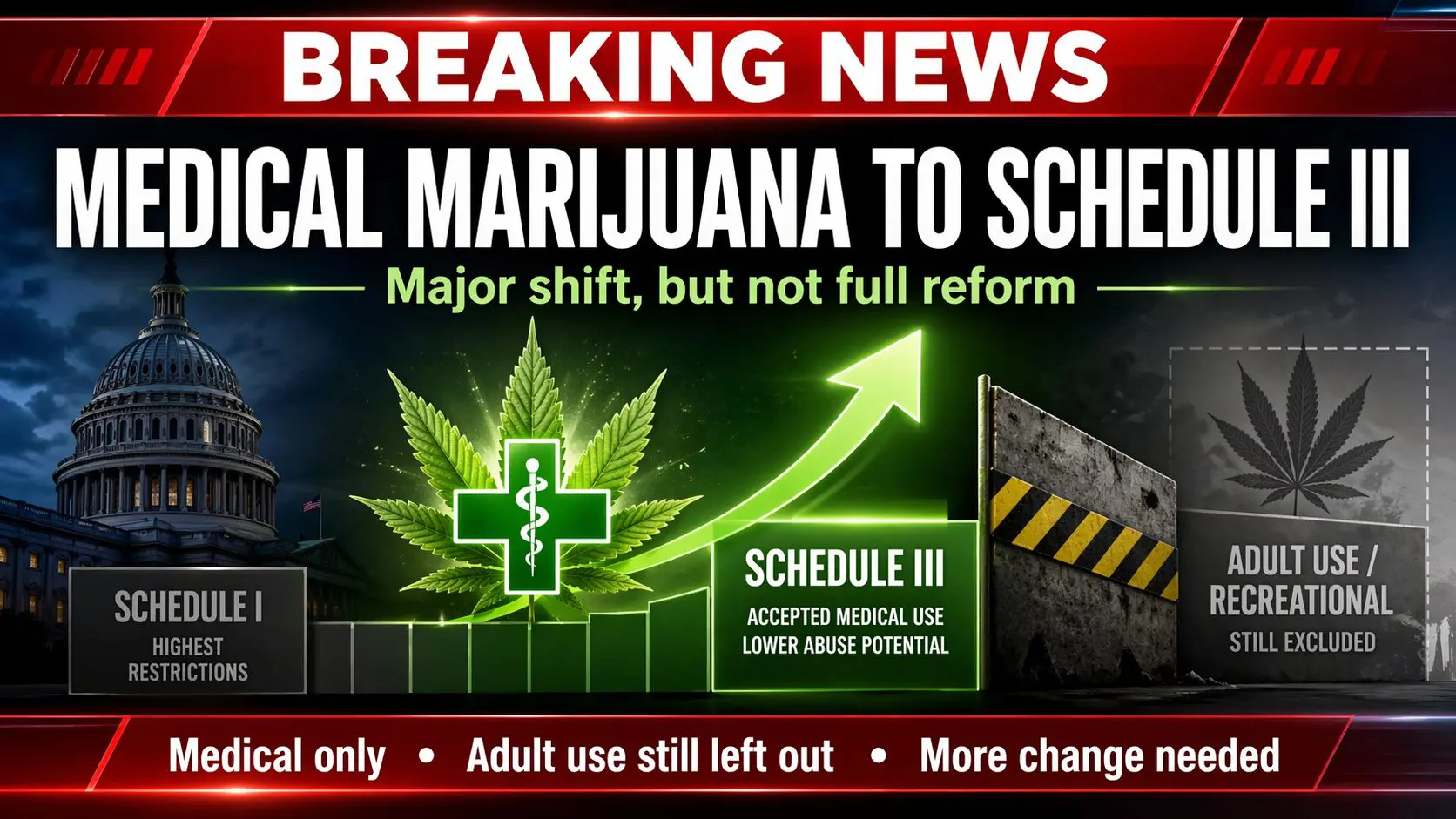
The state has spent years attempting to maintain an increasingly implausible distinction between a tightly controlled medical marijuana program serving a relatively small patient population and a broadly accessible hemp marketplace that millions of Texans have embraced.
The resulting contradictions have produced exactly what one would expect: lawsuits, inconsistent enforcement, market instability, and administrative confusion.
Businesses are left attempting to divine regulatory intent from hallway conversations and telephone calls. Agencies are forced to reconcile statutory language with political demands. Consumers are left uncertain about which products are lawful today and which may become contraband tomorrow.
No industry—least of all one employing tens of thousands of Texans—can operate indefinitely under those conditions. Which perhaps is the point.
If the allegations contained in the hemp plaintiffs’ latest filing are accurate, the state’s regulators may have inadvertently demonstrated precisely why the Court of Appeals should restore the injunction pending appeal: because when the agency itself cannot clearly articulate what rules are in force, regulated parties cannot reasonably be expected to comply with them.
The law is supposed to provide notice.
It is not supposed to require a phone tree.