Texas Hemp Reporter
  • News
  • Magazines
  • Texas Hemp Show
  • Advertising
  • Distribution
  • Subscribe
  • Contact
  • Business
  • News
  • CBD
  • Podcast
  • Health
  • Business
  • Legislative
  • Cannabis News
  • Pop Culture
  • Lab Testing
  • Agriculture
Texas Hemp Reporter
  • News
  • Magazines
  • Texas Hemp Show
  • Advertising
  • Distribution
  • Subscribe
  • Contact
  • Business
  • News
  • CBD
  • Podcast
  • Health
  • Business
  • Legislative
  • Cannabis News
  • Pop Culture
  • Lab Testing
  • Agriculture

Tag: Jay Maguire

The TCUP Math Problem: How a Busted Spreadsheet Rewrote the Medical Cannabis Map

Written by Jay Maguire on April 20, 2026. Posted in Legislative. No Comments on The TCUP Math Problem: How a Busted Spreadsheet Rewrote the Medical Cannabis Map


There is a particular kind of regulatory failure that does not arrive with subpoenas or headlines. It slips in quietly, dressed up in spreadsheets and procedural language, hiding in a denominator that nobody bothers to question. It looks clean, professional, even defensible—right up until someone actually runs the numbers.

That is precisely what has happened in the Texas Compassionate Use Program expansion under House Bill 46. The Department of Public Safety published a scoring rubric that promised a simple, balanced framework: four categories, each carrying equal weight. What the State implemented was not that framework. It was something materially different, and the difference is not philosophical or interpretive. It is mathematical, and it changed who won.


The Rule the State Published

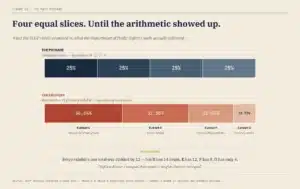
DPS told applicants, in plain English, that four categories would each account for 25 percent of the final score. Those categories—Security and Infrastructure, Accountability, Financial Responsibility, and Technical and Technological Ability—were presented as equal partners in the evaluation process.

There was nothing subtle about that promise. It was repeated in the rubric, relied upon in applicant preparation, and understood as the governing structure of the competition. Four equal slices of the pie, adding cleanly to one hundred percent. That is the rule applicants were told they were competing under.


The Structure Beneath the Rule

Beneath that clean promise, however, sat a more complicated reality. Each category contained a different number of scoring items. Security and Infrastructure included fourteen separate elements. Accountability included twelve. Financial Responsibility included eight. Technical and Technological Ability, the category that speaks most directly to whether an operator can actually run a compliant medical cannabis program, included just four.

Each of those items was scored by three evaluators on a scale of zero to five hundred. That structure produces dramatically different raw scoring ceilings. A perfect score in Security and Infrastructure reaches twenty-one thousand points, while a perfect score in Technical and Technological Ability tops out at six thousand.

There is nothing inherently improper about uneven category sizes. Any seasoned regulator or procurement officer has seen rubrics where some sections are more granular than others. The critical requirement, and the one that determines whether the system is fair, is normalization. If the State promises equal weighting, then each category must be scaled to ensure it actually contributes equally, regardless of how many individual items it contains.


What Equal Weighting Actually Requires

If you want four categories to count equally, the math is straightforward. You do not sum raw totals. You convert each category into a percentage of its own maximum possible score. Once each category is expressed as a percentage, you then apply equal weighting across those percentages.

In practical terms, that means taking an applicant’s score in each exhibit, dividing it by that exhibit’s maximum possible score, and then weighting each result at twenty-five percent. When you add those four weighted values together, you get a final score that reflects the rule the State said it would follow.

This is not exotic mathematics. It is standard practice across regulated industries, procurement systems, and competitive licensing frameworks. It is how you translate unequal components into equal influence.


What the State Actually Did

Instead of normalizing each category to its own maximum, DPS applied a single divisor across all four exhibits. Every raw score, regardless of whether it came from a category with fourteen items or one with four, was divided by twelve.

At first glance, that may look like a harmless simplification. It is not. When you divide unequal totals by the same number, you do not equalize them. You preserve their imbalance and carry it forward into the final score.

The result is a set of “Applicant Scores” that look standardized but are anything but. Security and Infrastructure retains a ceiling of 1,750 points, while Technical and Technological Ability is capped at just 500. When those numbers are combined, the weighting shifts dramatically. Security and Infrastructure ends up driving roughly thirty-seven percent of the final score. Accountability contributes about thirty-two percent. Financial Responsibility falls to roughly twenty-one percent. Technical and Technological Ability, the category that should stand shoulder to shoulder with the others, is reduced to just over ten percent.

That is not a rounding discrepancy or a clerical oversight. That is a complete reweighting of the system the State said it was using.


Why This Is Not a Close Call

There is no gray area here. Dividing unequal numbers by the same constant does not normalize them. It preserves their proportional differences. A category with a maximum score of twenty-one thousand will remain three and a half times more influential than a category capped at six thousand if both are subjected to the same divisor.

This is arithmetic, not interpretation. Once the method is set, the outcome follows automatically. The State did not accidentally drift away from equal weighting. It implemented a formula that could never produce equal weighting.

The result is that the rule applicants relied upon and the method used to evaluate them are not the same.


This Was Not an Isolated Mistake

If this were a one-off inconsistency buried in a single application, it might be dismissed as a transcription error. It is not. A review of virtually every scoring entry across both phases of the licensing process shows the same method applied without exception. Raw totals were divided by twelve, and those results were summed to produce final rankings.

This was the system. It was applied consistently. It was just not the system the State said it would use.


What Happens When You Fix the Math

When the applications are recalculated using the correct method—normalizing each category to its own maximum and then weighting them equally—the rankings change in ways that matter.

The very top of the list remains relatively stable. Companies that performed well across the board continue to perform well. The disruption occurs in the middle tier, where licenses are actually awarded.

Under the corrected calculation, three companies that received conditional licenses fall out of the top twelve. In their place, three different applicants move into winning position. Those new entrants are Texas-based operators who performed exceptionally well in Technical and Technological Ability, the very category that was most heavily discounted under the State’s method.

What emerges is not randomness or noise. It is a clear pattern. The flawed formula elevated categories with more scoring items—primarily infrastructure—and suppressed the influence of technical competence. When you restore the intended weighting, applicants who excelled in technical execution rise accordingly.


Why This Matters Beyond the Applicants

It is tempting to treat this as a dispute between competing companies, but that framing misses the point. Every license issued under this system determines where dispensaries are built, which companies invest capital in Texas, and how patients access medical cannabis.

For nearly a decade, Texas operated with just three dispensing organizations serving a vast and geographically dispersed patient population. House Bill 46 was supposed to correct that imbalance and bring the program into alignment with the needs of the state.

If the licensing process that governs that expansion is built on a misapplied formula, the consequences are not abstract. They are felt in the placement of facilities, the availability of products, and the ability of patients to obtain treatment without driving across half the state.

This is not a paperwork problem. It is a capacity allocation problem with real-world effects.


The State’s Position and Its Exposure

The State represented to applicants that each category would carry equal weight. Applicants relied on that representation in structuring their submissions. That reliance is not incidental; it is the foundation of the competitive process.

When the implemented methodology diverges from the published rule, the issue moves beyond process into legitimacy. The State is no longer simply defending a policy choice. It is defending a result that does not align with the rule it set.

That is a difficult position to maintain, particularly in a regulated industry where credibility is currency. Every future licensing decision, every enforcement action, and every legislative hearing will be measured against whether the State followed its own rules here.


The Path to Fixing It

The practical reality is that this problem is easier to fix than most regulatory failures. No one is asking the State to revisit subjective scoring decisions. The evaluators’ judgments on individual items are not in dispute, and the underlying data has already been recorded.

The correction is purely mathematical. Each exhibit score can be normalized to its maximum, weighted equally, and recombined into a final score that reflects the rule as written. From there, the State can determine how to align the licensing outcomes with the corrected rankings.

There are several paths available. They are known to DPS and the state leadership. The data is already in hand. The question is whether the State is willing to apply it correctly.


Final Consideration

This is not a partisan dispute or an ideological fight over cannabis policy. It is a question of whether a rule that was clearly stated was actually followed.

The State said each category would count equally. It used a formula that made them unequal. That is the entire issue, stripped of rhetoric.

Arithmetic has a way of cutting through arguments. It does not respond to intent or justification. It reflects only what was done. In this case, what was done does not match what was promised.

Texas now has a choice. It can defend the result as it stands, or it can correct the calculation and bring the outcome into alignment with the rule. The former invites challenge and erodes confidence. The latter restores both.

The calculator is indifferent. It will produce the same answer every time. The question is whether the State is prepared to accept it.

Author’s Note:

This article has been revised to more clearly present the scoring calculations underlying the Texas Compassionate Use Program licensing process. The updates expand the mathematical explanation and align the analysis with the methodology described in the State’s published rubric.


Bad Science, Political Raids, and the Setup Behind SB 3

Written by Jay Maguire on May 21, 2025. Posted in Lab Testing, News.

WARNING: THE REPORT DAN PATRICK DOESN’T  WANT YOU TO SEE!

In Texas, we’ve seen this before: a political agenda dressed up as public safety, a compliant bureaucracy, and the weaponization of bad science to justify bad law. But this time, it’s not marijuana. It’s legal hemp—and the state’s own forensic watchdog warned them not to do it.


The Science Was Clear


In July 2021, the Texas Forensic Science Commission (FSC) issued a report questioning the reliability of gas chromatography (GC) testing methods—specifically the kind used by Armstrong Forensic Laboratory—in determining THC levels in cannabis samples. The problem? GC destroys the chemical integrity of the sample by heating it, converting non-psychoactive THCa into delta-9 THC. The result: legal hemp often appears “hot” when tested this way.

By April 2025, the Commission had grown more urgent. In a formal warning, it told prosecutors and law enforcement not to rely on GC-MS without derivatization—the exact method Armstrong was using—because it does not distinguish between THCa and delta-9 THC in processed products like vape pens and edibles. The Commission’s position was clear: GC is not scientifically valid for the enforcement of Texas hemp laws. The right tool? High-performance liquid chromatography (HPLC), which preserves the cannabinoid profile without artificially inflating THC levels.


DPS Didn’t Just Ignore the Science—They Sought Out Bad Results

EDITORS NOTE: Since our reporting on this last week. The Official PDF has been removed. Click Above.

Despite having access to state-run, accredited labs that used validated HPLC methods, the Texas Department of Public Safety (DPS) chose Armstrong Labs. Why? Because Armstrong’s flawed GC testing produced the kind of “hot” results that could turn lawful retail inventory into felony contraband on paper.

This wasn’t just negligence—it was selective science-shopping. DPS bypassed better labs and used the one that would give them the numbers needed to justify search and arrest warrants. Those warrants led to a coordinated series of raids in August 2024 across North Texas, most prominently in Allen, where nine hemp retailers—nearly all minority-owned—were raided. Doors were kicked in. Products were seized. People were arrested. Lives were disrupted.

And when asked about the scientific controversy, DEA Special Agent Eduardo A. Chávez, standing behind a row of local police chiefs, said the quiet part out loud:

“We’re not going to get into a scientific debate.”

That’s because there was no debate. The science was already settled—just not in their favor.


Dan Patrick’s Fingerprints

The timing and utility of these raids are no coincidence. Lt. Governor Dan Patrick, a long-time prohibitionist, has made clear his desire to eliminate the hemp-derived THC market. Along with Senator Charles Perry, he introduced Senate Bill 3, a sweeping measure to criminalize and regulate hemp in ways that would effectively shut down thousands of small businesses statewide.

But Patrick’s proposals needed fuel—a sense of public danger. That’s where the Allen raids came in. News coverage of the raids, complete with sensational claims about high-THC products and cash seizures, created the illusion of widespread criminality. Those raids—and the test results behind them—became Exhibit A in the Senate’s push for SB 3.

In reality, the entire operation was built on sand. The lab method was known to be invalid. The warrants were based on forensically unsound evidence. The prosecutions have largely stalled or gone unfiled. But the political damage was done—and the policy momentum created by those raids is still being used to push bans, criminal penalties, and massive regulatory overreach.


The Consequences

Dozens of stores have closed. Millions in assets have been seized. Texas entrepreneurs—many from immigrant and minority communities—have been branded criminals for selling federally legal hemp products. Some of the retailers caught in this net can’t even afford legal counsel; their bank accounts are frozen, their reputations destroyed.

All because DPS chose the wrong lab on purpose.


If It’s Not Illegal, It’s Worse

Some may argue no laws were broken. But that’s the problem. When law enforcement uses scientifically invalid methods, even after being formally warned twice by the state’s own scientific authority, it isn’t just a technical error. It’s an abuse of power. Under Texas Penal Code §39.03, this pattern begins to resemble official oppression—public servants using their authority to target people unjustly under the color of law.

And the Fourth Amendment may also come into play. Raids based on scientifically discredited probable cause are ripe for constitutional challenge. The state didn’t just bend the law—it bent science, and it bent justice.


The Big Lie, Texas Edition

Dan Patrick’s prohibitionist crusade depends on the belief that hemp stores are fronts for drug dealers. But the science doesn’t support that claim, and neither do the facts. What we’re seeing is the deliberate manufacture of criminality using rigged lab results and coordinated enforcement—all to push a bill that benefits entrenched political allies and clears the market for the few operators who can afford to comply.

This is Reefer Madness 2.0—driven by bad labs, bad busts, and big lies.

Cannabis Prohibition, Moral Sorting, and the Civic Heresy We Must End

Written by Jay Maguire on April 18, 2025. Posted in Legislative.

God’s Poor and the Devil’s Poor:


As Holy Week calls millions to reflection on the meaning of suffering, mercy, and redemption, it’s worth examining how these sacred themes are distorted when transposed into public policy—particularly in how we legislate access to cannabis in Texas.

At the heart of Christianity—and especially the Holy Week narrative—is the radical idea that no one is beyond grace, that the suffering Christ stood with the outcast, the criminal, the leper, and the sinner—not because they were blameless, but because mercy is not earned. It is given.

Yet in cannabis policy, we see a stark betrayal of that principle, rooted in a theological artifact that has no place in modern governance: the ancient Protestant moral distinction between the “deserving” and “undeserving” poor—what historians have called God’s Poor vs. the Devil’s Poor.

This moral sorting lives on in the Texas Compassionate Use Program (TCUP), a system so deliberately narrow that it reflects not medical caution but moral gatekeeping. A cancer patient? They pass the test. A veteran with PTSD or a laborer with chronic pain? Denied. Not because they won’t benefit from cannabis—they will—but because they fall on the wrong side of an unspoken, unscientific moral line.

We saw this attitude in 2021, when Sen. Charles Perry opposed including chronic pain in TCUP, claiming “they’d just lie to get high.” That statement didn’t come from science or compassion—it came from a worldview that sorts suffering into categories: sanctified versus suspect. It’s not just stigmatizing—it’s theological in origin and punitive in practice.

And that’s the heresy.

Not religious heresy—but civic heresy. A betrayal of the founding principles that guide our pluralistic democracy. In this country, we do not make law according to theology. We do not ration compassion based on virtue. And we certainly do not let the state decide who is worthy of healing.

This Holy Week, as we remember Christ persecuted by political and religious authorities alike, we must ask: Are we repeating that mistake in our own time, in our own Capitol? Are we denying aid and relief to people who suffer—not because we doubt the medicine, but because we judge the person?

The Christ of Holy Week was not crucified because he helped the righteous. He was crucified because he stood with the condemned and refused to play the sorting game. He broke bread with sinners. He healed without asking for credentials. And he warned us, over and over, about the danger of confusing moral authority with political power.

When we legislate as though some people “deserve” access to cannabis while others are morally suspect for needing the same relief, we are doing the very thing Holy Week condemns: dressing punishment up as justice and withholding mercy from those who need it most.

We need to end this civic heresy—not just to fix cannabis law, but to uphold the Constitution and the moral integrity of our public institutions. If we believe all Texans are equal under the law, then all Texans should have equal access to relief, dignity, and care.

This week above all weeks, let’s remember: Mercy is not a reward for virtue. It is the obligation of power.

A Tale of Two Bills to Decide Fate of Texas Hemp Industry

Written by Jay Maguire on April 4, 2025. Posted in Legislative.

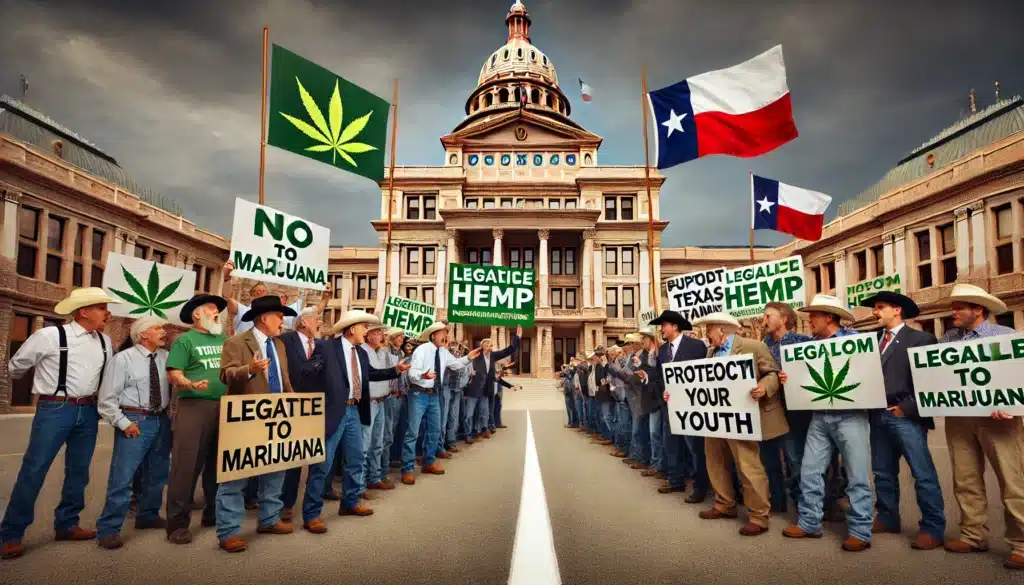
In just days, the Texas hemp industry faces what may be its defining moment since legalization in 2019. The House State Affairs Committee, chaired by Representative Ken King, will convene Monday morning to hear testimony on two bills with starkly different visions for the future of hemp in Texas.

The hearing, scheduled for 8:00 AM on April 7 in room JHR 120, will feature two competing approaches to hemp regulation that could not be more different in their impact on the thousands of businesses and workers in this growing sector.

A Tale of Two Bills

House Bill 28, authored by Chairman King himself, represents a regulatory path forward. While imposing new restrictions—including age verification requirements, licensing standards, and quality controls—it allows the industry to continue operating under enhanced oversight. This approach acknowledges the economic reality that the hemp industry has become a significant contributor to the Texas economy.

In stark contrast stands Senate Bill 3, championed by Senator Perry and already passed by the Senate with Lieutenant Governor Patrick’s backing. This bill takes a prohibitionist stance, effectively banning most hemp-derived products beyond CBD and CBG. The practical effect would be the criminalization of businesses that have been operating legally since hemp was federalized and then legalized in Texas.

The Texas hemp industry must recognize this hearing as a truly existential moment. The difference between these bills is the difference between a future for hemp in Texas and no future at all.

The Stakes for Texas Businesses

For hemp entrepreneurs across Texas who have invested everything in building compliant businesses, Monday’s hearing represents a crossroads. Many have implemented strict age verification, comprehensive product testing, and responsible marketing practices that avoid targeting young people. Despite these efforts, SB 3 would shut down operations overnight, resulting in job losses throughout the supply chain.

These business owners aren’t alone. Thousands of Texans now work in hemp-related businesses across the state, from cultivation to manufacturing to retail. Many industry stakeholders emphasize they’re not opposed to reasonable regulation.

The hemp industry broadly acknowledges the need for age restrictions, quality control standards, and responsible business practices. The objection is to prohibition disguised as regulation—the difference between workable rules and an outright ban that destroys livelihoods.

Two Minutes to Make a Difference

Those planning to attend Monday’s hearing should note that public testimony will be limited to just two minutes per person—barely enough time to introduce oneself and make a few key points. This limitation makes preparation essential.

Industry advocates recommend business owners focus their brief testimony on concrete facts: business location, number of employees, economic impact, and specific measures implemented to prevent youth access. Those unable to attend in person can submit written comments electronically through the House website until the hearing concludes.

Experienced observers of the legislative process note that lawmakers respond best to personal stories with specific details. Effective testimony should explain exactly how SB 3 would affect individual businesses, employees, and communities while emphasizing support for appropriate regulation rather than prohibition.

Regulation vs. Prohibition

The fundamental question before the committee is whether Texas will embrace a regulated hemp market or attempt to put the genie back in the bottle through prohibition.

Historical evidence suggests prohibition rarely works as intended. Rather than eliminating products, prohibition typically drives markets underground, removing quality controls and age verification while enriching illicit operators. Meanwhile, legitimate businesses close, tax revenue disappears, and products simply flow in from neighboring states with more permissive laws, not to mention empowering drug cartels by creating a supply vacuum.

Economic analysts point out that prohibition doesn’t eliminate demand—it just changes who profits from it and removes safeguards for consumers.

The Time for Action

As Monday approaches, the Texas hemp industry faces its most significant challenge yet. The businesses that have operated transparently and responsibly since 2019 must now make their case directly to lawmakers that regulation, not prohibition, is the path forward.

Whether through in-person testimony, written comments, or direct outreach to committee members, every voice matters in this crucial debate about the future of hemp in Texas. For thousands of business owners and their employees, Monday’s hearing may well determine whether they have a future in this industry at all.


Committee Hearing Information

Time: 8:00 AM, Monday, April 7, 2025
Location: JHR 120, Texas Capitol
Committee: House State Affairs
Chair: Rep. Ken King

To Register for In-Person Testimony:
https://mytxlegis.capitol.texas.gov/HWRSPublic/About.aspx

To Submit Written Comments:
https://comments.house.texas.gov/home?c=c450

Live Video Broadcast:
https://house.texas.gov/video-audio/

CRAFT Leads the Way in Hemp Compliance as SB 3 Threatens Industry

Written by Jay Maguire on April 2, 2025. Posted in Legislative, Texas Legal & Regulatory News.

CRAFT Leads the Way in Hemp Compliance as SB 3 Threatens Industry


As the Texas Legislature debates SB 3—a bill that would ban all THC products—responsible hemp retailers across the state are stepping up to protect their businesses, their customers, and their communities.


For the past 18 months, Texas hemp industry advocates, business owners, policy and legal experts have worked to create a set of training modules, model store manuals, SOPs and other compliance-related business standards that can be adopted statewide to assist small businesses with building their compliance and sales capacity while pushing back against the false narratives being used to push the Prohibitionist ban agenda. The Cannabis Retailers Alliance for Texas (CRAFT) is a multi-sector industry-led effort to prove that the hemp industry is capable of self-regulation. Our members have voluntarily implemented a 21+ age policy, adopted rigorous product sourcing and testing standards, and developed a comprehensive Retailer Playbook to help businesses stay compliant in a shifting legal environment.


Our members didn’t wait for politicians to tell them what’s right,” said Jay Maguire, CRAFT co-founder and spokesperson. “Moral panics don’t start with facts—they start with fear. And that’s exactly what Lt. Governor Dan Patrick and Senator Charles Perry relied on: Reefer Madness-style scare tactics and cherry-picked anecdotes. Even when the stories were true, they were outliers—not the norm. The vast majority of retailers are doing the right thing. CRAFT members voluntarily enforce a 21+ age policy and card every customer at the point of sale—just like alcohol and tobacco. That’s what responsible businesses do.”


When Lt. Governor Dan Patrick visited Happy Cactus shop in Austin last week unannounced and looking for evidence of super-high THC products, he was expecting a political “gotcha” moment. What he found instead was a professional, compliant business, stocked with compliant products and operated with trained staff following company policy, carding customers and following best practices. That’s not politics—that’s policy in action.


Key leaders in the hemp space are weighing in:


• Rhiannon Yard, owner of Hemp Gaia, says: “We teach retailers how to verify COAs match the products on their shelves and ensure lab tests were done using the correct methods at accredited labs. That’s how we protect our customers and our licenses.”


• Nick Mortillaro, owner of Lazydaze Coffeeshops, adds: “Retailers need to cut through the buzz and noise with real, evidence-based education. That’s what CRAFT provides.”


• Brian Dombrowsky, owner of Aim High Distro, says: “CRAFT helps business owners stay licensed and build trust by educating their communities about what they do.”


The public already supports this approach. Polls show that 68% of Texans favor safe, regulated access to THC—and the $8 billion Texas hemp market proves they’re voting with their wallets.


📣 To read the full press release or to join the movement, visit joincraft.org


If you’d like to learn more, speak with a CRAFT spokesperson, or schedule a visit to one of our member retailers, feel free to reach out directly.


Best regards,

Jay Maguire

CRAFT Co-founder and Spokesperson

📧 maguire@joincraft.org

📞 512-954-8054

judge's gavel with hemp flower

Patrick Takes Budget Hostage, Demands House Pass SB 3

Written by Jay Maguire on March 27, 2025. Posted in Texas Legal & Regulatory News.

“The amount of energy needed to refute bullshit is an order of magnitude bigger than to produce it.”—Brandolini’s Law

Texas Lt. Gov. Dan Patrick has once again made clear that he’s willing to derail the state’s legislative agenda unless lawmakers deliver on two of his highest priorities: a sweeping ban on hemp-derived THC products and a constitutional amendment that would allow courts to deny bail in a wide range of cases.

His message is blunt: pass Senate Bill 3 and Senate Joint Resolution 5—or face a special session and the threat of a frozen state budget. This isn’t just hardball politics—it’s an attempt to bulldoze policy changes through fear, misinformation, and manufactured urgency.

No Room for Facts in Patrick’s THC Crusade

Despite overwhelming opposition, including testimony from hundreds of industry professionals and consumers, and extensive evidence debunking the claims of his handpicked witnesses, the Texas Senate last week passed SB 3, authored by Sen. Charles Perry. The bill would ban virtually all products containing detectable levels of THC—unless they’re part of Texas’ extremely limited medical marijuana program.

Patrick insists the legislation is needed to protect children from so-called “high-potency edibles” and unregulated bad actors. In reality, SB 3 would dismantle a legitimate, fast-growing sector that’s been operating under both state and federal oversight, with licensed retailers following strict compliance protocols.

To make his case, Patrick recently made a highly publicized visit to Happy Cactus Apothecary, a boutique wellness store in Austin that sells hemp-derived products. Expecting to uncover a lack of oversight, Patrick instead found well-trained staff, strict age-verification protocols, and store leadership that had already taken proactive steps to limit access to minors—including issuing a no-trespass notice to nearby Crockett High School students.

Store attorney David Sergi joined the visit by phone and made clear that the store has been working closely with local authorities to ensure compliance and transparency. In short, there was no scandal—just a responsible business following the law.

None of that stopped Patrick from continuing to push a narrative of chaos and lawlessness in the hemp industry. His strategy isn’t built on facts; it’s built on volume. And because few people invest the time to challenge his talking points, his version of the truth often dominates.

A Bail Overhaul That Undermines Due Process

The second front in Patrick’s campaign is a proposed constitutional amendment that would give judges broad new power to deny bail in cases beyond capital murder—the one category currently exempt from Texas’ constitutional right to reasonable bail.

Through Senate Joint Resolution 5, Patrick and his allies want to grant courts the authority to keep individuals jailed before trial if they are accused of certain violent offenses. Supporters frame this as necessary for public safety, but critics argue that it amounts to pretrial punishment without due process—an erosion of the presumption of innocence that’s central to the American legal system.

Legal scholars and civil rights advocates warn that expanding pretrial detention this way will increase jail populations, disproportionately impact marginalized communities, and burden taxpayers without producing measurable gains in public safety.

Political Theater with Real-World Consequences

Patrick’s approach is straightforward: use fear to drive policy, cast any dissent as a threat to public safety, and marginalize the very stakeholders working to build lawful, responsible industries in Texas. In doing so, he avoids debate and dodges scrutiny, counting on the media and public to move on before anyone checks the facts.

What happened at Happy Cactus should have been a turning point. Instead, it became just another footnote in a campaign built on ignoring what’s right in front of him. The business followed the law. It protected minors. It welcomed oversight. But Patrick walked away still insisting the system was broken.

This is not how sound policy is made. And yet, it often works—because so few are willing to take the time to refute the stories Patrick tells.

The hemp industry and Texas’ longstanding legal traditions are now in his crosshairs. If lawmakers don’t push back with facts, with clarity, and with courage, the state may soon find itself under laws crafted not from evidence, but from political expedience.

Texas SB 3 Hearing: Industry Advocates Challenge “Reefer Madness” Tactics…

Written by Jay Maguire on March 7, 2025. Posted in Legislative.

‘Reefer Madness’ Rhetoric vs. Industry Response

A contentious Texas Senate hearing on Senate Bill 3 (SB 3) – a proposal to ban all consumable forms of THC – erupted into a fierce debate between prohibition advocates and a broad coalition of industry experts, medical patients, and veterans calling for sensible regulation rather than outright prohibition. The March 3, 2025 Senate State Affairs Committee hearing pitted Senator Charles Perry (R-Lubbock) and Chief Steve Dye of the Allen Police Department against hemp industry representatives who accused SB 3’s backers of employing intellectual dishonesty and fear-mongering rhetoric reminiscent of “Reefer Madness” propaganda.
From the outset, Sen. Perry and Chief Dye set a dire tone. Perry blasted the hemp industry as untrustworthy and accused it of exploiting legal loopholes “to the point that it has endangered public health.” He asserted that “high-potency synthetic THC products have flooded the marketplace,” deliberately conflating Delta-8 THC (a naturally occurring cannabinoid typically synthesized from legal CBD) with truly synthetic drugs like K2/Spice. By branding Delta-8 a “synthetic THC,” Perry implied it is on par with those dangerous street drugs – a misleading equivalence that industry advocates repeatedly challenged.
Chief Dye amplified this alarm, representing a coalition of law enforcement groups supporting the ban. He cited undercover operations in his city that supposedly found some “hemp” products with THC levels up to 78% – far above the 0.3% legal limit. Dye warned senators that product labels “do not reflect” actual contents, leading to “accidental intoxications, overdoses and increased addiction…particularly in our youth.” This choice of words – invoking overdoses and youth addiction – appeared calculated to provoke fear of a looming public health disaster.

Industry Advocates Call for Regulation Over Prohibition

Industry representatives, veterans, and medical patients united in opposition to the ban, emphasizing that regulation rather than prohibition would better serve public interests. Among them was Jay Maguire of the Texas Hemp Federation, alongside numerous business owners and cannabis advocates who presented a united front against SB 3.
Multiple witnesses highlighted the choice lawmakers face: continuing to allow access to regulated hemp products or pushing demand underground. As the Texas Hemp Reporter’s own Jay Maguire, testifying on behalf of the Cannabis Retailers Association of Texas (CRAFT) testified, “Your decision today will mean that future generations to come will thank you for allowing them access to relief readily available through over-the-counter wellness products containing hemp-derived cannabinoids, or, by banning it and handing over the enormous demand to those we are working so hard to stop at our border, creating a black market and empowering future generations of El Chapos.”
This stark warning encapsulated a core message from industry representatives: banning legal hemp-derived THC will not stop demand – it will simply empower criminal organizations and cartel-style illicit traffickers to fill the void, undermining public safety far more than regulated sales ever would.
Multiple industry experts argued that the state can solve youth access issues through technology and training without dismantling the entire hemp market. They emphasized that modern “age-gating” solutions (already used by reputable CBD shops) can electronically verify IDs and block under-21 sales, just as liquor stores or vape shops do. Some industry organizations have been developing standards for age-gating since 2020, well before any legal mandate.
“We’ve built a transparent, regulated industry that protects consumers,” stated one industry representative. “Dismantling it would only benefit illegal operators.” In other words, a ban would drive demand to the black market (where no one asks for ID), whereas enforcing ID checks in legal shops keeps kids out.

Data vs. Fear: Challenging Misleading Claims

Central to Chief Dye’s argument for the ban was that hemp-derived THC poses a growing public safety hazard, evidenced by more kids ending up intoxicated or in emergency rooms. A chief concern raised was a supposed spike in calls to poison control centers due to Delta-8. Dye and a supportive witness, Dr. Matthew Rossheim (a public health professor), both suggested that pediatric exposures were sharply rising. Rossheim claimed Texas has “seen sharp increases in emergency room visits for pediatric poisonings” from these products.
However, industry advocates provided data and context that significantly undercut these claims. They pointed out that reports to poison control have not dramatically increased since Delta-8 entered the market, contrary to the narrative of a crisis. In fact, no one at the hearing could cite evidence of a Texas-specific surge in serious adverse incidents.
Several industry representatives explained that many cases labeled as “poisonings” were actually instances where novice users simply “freaked out” after eating a strong Delta-8 gummy, leading them or their parents to seek help – an anxiety reaction, not a toxic overdose. With proper dosing education, they argued, these incidents are preventable and inherently less dangerous than portrayed.
Furthermore, state officials at the hearing quietly acknowledged that quality-control issues, while real, have been limited in scope. When pressed, a Department of State Health Services expert conceded there have only been a handful of instances of hemp products exceeding the 0.3% THC limit or being mislabeled – “not many and not a significant problem” based on their reports. This directly contradicted Perry’s portrayal of an out-of-control market flooded with potent contraband.

Industry, Patients, and Veterans Push Back

The vast majority of the nearly 170 people who signed up to testify were opposed to SB 3. Business owners, cannabis advocates, veterans, medical patients, and even some healthcare professionals testified that the answer is regulation, not prohibition.
Lukas Gilkey, co-founder of Austin-based Hometown Hero CBD (one of Texas’s largest Delta-8 retailers) and a U.S. Coast Guard veteran, was a prominent witness against the bill. Gilkey emphasized that Texas’s hemp businesses are not underground drug dealers, but licensed retailers contributing to the economy and serving consumers’ needs. By outlawing all THC products, lawmakers would be “pulling the rug out from under” an entire small-business sector that employs around 50,000 Texans and includes 7,000+ licensed shops statewide.
Multiple veterans – some in military uniforms – spoke out to oppose SB 3, emphasizing how accessible hemp-derived THC products have been life-changing for veterans dealing with PTSD, chronic pain, and other service-related injuries. They contrasted the ease of walking into a local shop for a therapeutic gummy with the bureaucratic hassle and expense of Texas’s restrictive Compassionate Use Program (CUP) for medical marijuana.
One emotional moment came when a mother, Piper Lindeen, described how low-THC cannabis kept her epileptic son’s seizures at bay; she pleaded not to take away the only thing giving her child a normal life.
Other witnesses provided pragmatic solutions that directly countered Perry and Dye’s points. Several suggested Texas implement testing and labeling standards (for potency, purity, child-resistant packaging, etc.) similar to states with legal cannabis, rather than ban products outright. Mark Bordas, a hemp business owner, used a memorable analogy: “You don’t cure alcoholism by banning light beer. Hemp is the light beer of cannabis…If Texas has a THC problem, isn’t the source the high-potency marijuana?” His point neatly flipped Perry’s logic, arguing that hemp products are actually a milder alternative to illicit high-THC cannabis.

Regulation vs. Prohibition: A Better Path Forward

Throughout the hearing, industry stakeholders emphasized that they acknowledge the need for tough standards to keep bad actors in check and kids out of harm’s way. They insisted those goals can be met without destroying a legitimate industry and criminalizing countless Texans.
Retailers like Shayda Torabi, co-owner of Restart CBD in Austin, testified that her store strictly age-verifies every purchaser. “As a retailer I am age-gating product sales…Knee-jerk reactions are not the way to eliminate bad actors,” Torabi told senators, urging them to punish those who sell to minors rather than all businesses wholesale.
“If stores around this state are selling to children, it’s the Legislature’s fault for not adding that verbiage into the bill,” said Nicholas Gresham, owner of East Texas Hemp Company, referring to the lack of explicit age restrictions in the original 2019 hemp law.
Multiple advocates stressed that Texas has the capability to regulate sales through common-sense measures – from requiring child-resistant packaging and clear labeling to restricting marketing that targets minors – all without resorting to prohibition. Their testimony underscored the point that responsible businesses already voluntarily enforce age limits, knowing it’s in their best interest to prevent youth access. They urged the committee to codify these practices statewide.

Critical Moments and Outcome

The SB 3 hearing had several flashpoints that illustrated the intensity of this debate. One striking moment came when the audience’s reaction led to the entire Senate gallery being cleared. As multiple witnesses passionately rebuked the ban and defended legal THC, supporters in the gallery clapped and cheered – defying the chairman’s warnings to remain quiet. After a few such outbursts of applause, state troopers were ordered to empty the gallery for roughly 30 minutes. Seasoned advocates noted they had “never seen the full gallery cleared” before. This incident underscored the high emotions on display and the overwhelming sentiment in the room, which appeared to favor regulation over an outright ban.
Another pivotal moment was Sen. Perry’s closing remarks. After hours of being on the defensive, Perry doubled down on his stance and lashed out at the hemp industry as “bad actors clinging to keep their unethical market alive.” Perry’s comparison of the industry to 1950s-era tobacco companies – effectively accusing them of lying about safety – drew murmurs and prompted one final wave of responses from witnesses.
The State Affairs Committee left SB 3 pending without taking an immediate vote – a pause that suggested at least some lawmakers had reservations about rushing forward. Lt. Gov. Dan Patrick has signaled SB 3 is a fast-track priority, claiming banning Delta-8 will “keep these unsafe products off our streets,” despite evidence that prohibition often does the opposite.

Conclusion: A Crossroads for Texas Cannabis Policy

The hearing made clear that Texas stands at a crossroads on hemp and cannabis policy. On one side, leaders like Lt. Gov. Dan Patrick and Sen. Perry are doubling down on a hardline, prohibitionist stance fueled by alarming narratives of public danger. On the other, a growing alliance of entrepreneurs, consumers, patients, and industry advocates are calling for a more nuanced approach.
As one industry representative reminded the senators in closing, “You don’t often get a second chance to avoid a costly mistake,” urging them not to repeat the errors of past drug policy.
Whether the Texas Legislature will heed this call for balance remains to be seen. But for now, the voices of reason – from industry representatives to the everyday Texans who showed up to testify – have made their case loud and clear. Future generations of Texans, they argue, will either thank this legislature for keeping wellness products accessible and safe, or curse it for empowering black markets and “future El Chapos.” The choice lies in lawmakers’ hands, and all of Texas is watching.

Top Ten Prohibitionist Lies

Written by Jay Maguire on March 7, 2025. Posted in Legislative, The Drug War.

The March 3 hearing showcased the best anti-THC talking points from the 1970’s, 80’s and beyond. Like a hit parade of bogus tunes, here’s the Top Ten Prohibitionist Lies

1. “Marijuana is a Gateway Drug”

• Falsehood: Using marijuana leads people to use harder drugs like heroin or meth.

• Reality: Numerous studies, including from the National Institute on Drug Abuse (NIDA), show no causal link between marijuana use and subsequent hard drug use. The real gateway factors tend to be socioeconomic conditions, trauma, or early exposure to addictive substances like alcohol and nicotine.

2. “Marijuana Causes Violent Crime”

• Falsehood: Legalizing marijuana increases violent crime rates.

• Reality: Crime statistics from states that have legalized cannabis (e.g., Colorado, Washington) show no significant rise in violent crime—and some cities have even reported decreases. In contrast, illegal drug trade violence often decreases when legal markets replace black market sales.

3. “Marijuana Lowers IQ and Makes People Lazy”

• Falsehood: Long-term cannabis use reduces intelligence and destroys motivation.

• Reality: Studies show no significant IQ drop in adults who use cannabis. While adolescent overuse may impact cognitive development, occasional adult use has not been linked to measurable declines in intelligence. Moreover, many successful professionals and creatives openly use cannabis without suffering motivational issues.

4. “Marijuana is as Dangerous as Heroin and Fentanyl”

• Falsehood: Cannabis is a “Schedule I drug” because it’s highly addictive and has no medical benefits.

• Reality: Marijuana is not chemically addictive in the way opioids or nicotine are, and it has established medical benefits for pain, epilepsy, PTSD, and more. In fact, it is far less harmful than alcohol and prescription painkillers.

5. “Legalization Leads to More Teen Use”

• Falsehood: When states legalize marijuana, more teenagers will start using it.

• Reality: Studies from The Journal of the American Medical Association (JAMA) and Colorado Department of Public Health show no increase in youth marijuana use post-legalization. In fact, some states have seen decreases in underage use due to better regulation.

6. “Marijuana Kills Brain Cells”

• Falsehood: Smoking weed permanently destroys brain cells.

• Reality: This myth originated from a flawed 1970s study where researchers suffocated monkeys with excessive cannabis smoke, depriving them of oxygen. Modern neuroscience shows that cannabis affects brain function but does not destroy brain cells.

7. “People Overdose on Marijuana”

• Falsehood: Cannabis use leads to lethal overdoses.

• Reality: There are zero recorded deaths from cannabis overdose. While high doses can cause discomfort, anxiety, or nausea, it does not suppress respiratory function like opioids.

8. “Legal Marijuana States Have More DUIs and Traffic Accidents”

• Falsehood: Marijuana legalization leads to more impaired driving and crashes.

• Reality: While THC can impair driving ability in some cases, overall crash rates have not spiked in legal states. Many studies indicate that drunk driving is a far bigger problem than cannabis-impaired driving.

9. “Marijuana Has No Legitimate Medical Use”

• Falsehood: There is no scientific evidence supporting medical marijuana.

• Reality: Cannabis is FDA-approved for multiple conditions, and studies confirm its effectiveness in treating epilepsy (CBD), chronic pain, nausea from chemotherapy, PTSD, and multiple sclerosis. The U.S. government even holds a patent on cannabinoids for their neuroprotective effects.

10. “Marijuana Legalization Harms the Economy”

• Falsehood: Legal weed will damage businesses and hurt the economy.

• Reality: Legal cannabis is one of the fastest-growing industries, generating billions in tax revenue, creating hundreds of thousands of jobs, and reducing costs related to law enforcement

Navarro County and the Case of the Missing Hemp: Sky & Hobbs

Written by Rachel Nelson on June 3, 2022. Posted in Cultivation.

For nearly a year, Hunter Robinson had felony drug charges looming over him after he says he grew hemp legally in Navarro County.

“It’s been quite rough on my family, myself, everything. You name it — it’s impacted me. It’s been terrible,” he said.

Robinson, a 27-year-old disabled U.S. Navy veteran who said he greatly benefitted from using CBD products, received a hemp producer license from the Texas Department of Agriculture (TDA) in 2021. He and his business partner, 28-year-old Skyler Purcell, said compliance was at the top of their priority list when they launched Sky & Hobbs Organics, LLC with the intention of producing CBD flower and oil.

“We spent hours upon hours going through every single genetic variety that was on the TDA’s approved variety list,” Robinson said. 

Rather than selecting the coolest-looking varieties or strands with the catchiest names, the pair said they picked the lowest testing varieties they could get their hands on. Each time the TDA tested samples of Sky & Hobbs’ products, they passed all criteria.

“All of our product had already been tested previously and deemed by the state of Texas and Texas Department of Agriculture as approved, compliant hemp.” Purcell said. Purcell, who was a 50% co-owner of the business, was never charged with a crime.

“They were trying to produce the best legal quality product they could find, and they took extraordinary steps to do that,” defense attorney David Sergi said. 

Robinson and Purcell said they were stunned when their indoor growing facility was raided on June 10, 2021, by the Navarro County Sherriff’s Department, which had a search warrant signed by Navarro County District Judge James E. Lagomarsino. When nobody answered the door, officers used forced entry and seized three product varieties. 

Robinson and Purcell said they provided the officers on scene with documentation that proved they were operating a legal business, but that didn’t stop them. For more than two months, the property remained an active crime scene that Robinson and Purcell were not allowed to access. 

Law enforcement officers returned to Sky & Hobbs Organics on Aug. 25 with an arrest warrant for Robinson — also signed by Judge Lagomarsino — that alleged he knowingly and intentionally possessed “a usable quantity of marijuana against the peace and dignity of the state.” According to the sheriff’s office, two of the company’s samples contained 0.378% and 0.468% of delta-9 THC by dry weight, which is over the legal limit of .3%.

Robinson was arrested and charged with felony posession of marijuana. He spent 30 hours in jail before bonding out. 

The Texas Hemp Program was launched after the U.S. Farm Bill legalized the cultivation of cannabis in 2018. According to the law, if the THC level falls above 0.3% but below 1%, the crop must be destroyed. If a product tests for higher than 1% THC levels, the grower can be cited with negligence by the TDA. If the TDA determines that a grower deliberately produced a crop with 1% of THC or higher, they can face criminal charges. This provision allows for natural variations in THC levels, Sergi said. 

“From our point of view, the product was within legal limits and all the testing showed that it was under .03% Delta-9 THC, and at worst there is a reason why there is a negligence factor built into the code, and this is exactly where this falls in,” Sergi said. 

The legal battle ahead

In May, the state dismissed the case against Robinson, stating there was not enough evidence to prove he was in possession of marijuana. 

“I’m on cloud 9. I’m celebrating every day,” Robinson said. “I’m at work, and I’m celebrating. I’m outside last night, it’s getting reaedy to pour down, the wind is coming through … a storm is coming through, and I’m outside with a cigar and a glass of whiskey just celebrating. I mean, it’s been a year. We’ve been dealing with this for so long.”

Currently, Purcell and Robinson are asking for the public’s help to raise funds for their ongoing legal costs. Those who want to contribute can visit texashempfederation.com and click on the “Donate” button on the home page. 

According to Jay Maguire, executive director of the Texas Hemp Federation, everything the organization raises will support this cause until their goal is met. 

“We just want everyone involved in this industry to understand what’s taking place is possible, and if they see this as a problem, hopefully they would feel how we’re feeling and contribute,” Robinson said. 

People can also help by sharing the story to raise awareness about the fact that — while hemp farming is legal in Texas with the proper licensure — there is an apparent disconnect when it comes to educating jurisdictions about hemp farming laws. 

“The Sky and Hobbs case also points to a deficiency in Texas regulations about how to even out, or remediate a crop, which can vary in THC levels from plant to plant,” Maguire said. “It’s a bit like blending different varietals of wine.” 

According to the U.S. Department of Agriculture, remediation can be achieved by separating and destroying non-compliant flowers while retaining stalks, leaves, and seeds, or by shredding the entire hemp plant to create a homogenous biomass that can be retested for THC compliance. So, even if one batch is a bit over the limit, by mixing it in with lower-THC, compliant biomass, the resulting batch would fall at or below the legal limit. 

“My understanding is police here simply took samples from plants that weren’t even in the stream of commerce yet, and which could have been remediated or destroyed according to the current regulations,” Maguire said.

Also questionable, Purcell said, is the fact that the Navarro County Sherriff’s Office never filed an administrative report about the incident with the TDA as protocol states.

“Before there’s any accountability you have to go through the steps,” Sergi said. 

Shattered dreams

As childhood friends, Robinson and Purcell dreamed of one day starting a business venture together. 

“We wanted to do the right business at the right time and take advantage of a situation,” Robinson said. “We realized that cannabis was coming sooner rather than later and that hemp was the starting point.”

Robinson and Purcell invested $75,000-$100,000 into Sky & Hobbs Organics and continued working full-time jobs while pouring a majority of their spare time into the business.

“We wanted to be able to say we were producing the cleanest, the best legal product that Texas had to offer. Every dollar we got went back into our business. In our five-year plan, me and Sky weren’t going to be taking any money for a long time,” Robinson said.

Now, rather than building a lucrative revenue stream, Robinson and Purcell are scrambling to get back on track financially. 

“We had to close our business, our business account, our website,” Robinson said. “We’ve relaunched our website and we’re actually going to start doing stickers and see if people are willing to do a $5 donation for a sticker.”

Throughout the process, Robinson said he feared what a felony conviction would interfere with his job as a mechanical engineer. He also relocated to be closer to his wife’s family so she and their children will have support in case anything happened to him. In addition, both men say they are devastated about what’s been lost. 

“We put everything into this — life savings. I’ll never get that time back. We were doing it with something in mind. We wanted to build something for our families, and it’s a shame that there are no protections for us. I have contacted the TDA. There’s no one to help us.”

Robinson and Purcell both say they were robbed of a chance a pursuing the American dream.

“And not only that, I got taken to jail for following the American dream,” Robinson said. “I loved doing what we were doing, but the only way I would ever participate in this industry again is if I knew that the state or the feds would protect the people participating in this legally.”

Author and film-maker Bart Sibrel comes on the show to discuss his new book MOON MAN. Sibrel has been on our others shows before and since he was recently on CNN, Fox News, News Nation, and Pierce Morgan . . . we are running our 2023 interview on his book Moon Man....

Blazed Weekly News will Return next Friday morning with the "Live Stream" of the Temporary Injunction hearing . . . Happy 420 - We are working Blazed May Edition ....

What Do you think? Did we go to the moon? COMMENT BELOW!

Author and film-maker Bart Sibrel comes on the show to discuss his new book MOON MAN. Sibrel has been on our others shows before and since he was recently on CNN, Fox News, News Nation, and Pierce Morgan . . . we are running our 2023 interview on his book Moon Man....

Blazed Weekly News will Return next Friday morning with the "Live Stream" of the Temporary Injunction hearing . . . Happy 420 - We are working Blazed May Edition ....

What Do you think? Did we go to the moon? COMMENT BELOW!

2 0

YouTube Video VVVZQ3R0UjVRNEtJVVR5aV9VVmR2Y1dnLjlxV25QaWs5UEU0

Moon Man Bart Sibrel - Was Artimis II Real or Exploited?

Blazed Weekly News April 16, 2026 4:17 pm

Live at 2PM CST - Hemp Hearing  Save Texas Hemp 

🎙️ https://streamyard.com/pal/d/5889125601771520

Visit: blazednews.com/
IG : www.instagram.com/blazednewz/
X:  BlazedNewz

Thank you for helping us grow our Youtube Channel! Please hit the subscribe button and be apart of our community.


Additional Links: 
Link source - https://youtube.com/@traviscounty459thdistrictc4?si=K-1a1Czmk8XlJ84K
Sergi Law & Associates : www.sergilaw.com/

Live at 2PM CST - Hemp Hearing Save Texas Hemp

🎙️ https://streamyard.com/pal/d/5889125601771520

Visit: blazednews.com/
IG : www.instagram.com/blazednewz/
X: BlazedNewz

Thank you for helping us grow our Youtube Channel! Please hit the subscribe button and be apart of our community.


Additional Links:
Link source - https://youtube.com/@traviscounty459thdistrictc4?si=K-1a1Czmk8XlJ84K
Sergi Law & Associates : www.sergilaw.com/

96 14

YouTube Video VVVZQ3R0UjVRNEtJVVR5aV9VVmR2Y1dnLk5pdWdpVl9aTTYw

Live at 2PM CST - Hemp Hearing Save Texas Hemp

Blazed Weekly News April 11, 2026 3:58 am

David Sergi talks about the hearing Friday that will determine if industry will be granted the TRO or perhaps later an injunction. Jay Maguire worked alongside Sergi and other industry members.

The hearing starts at 2pm tomorrow.


Sergi says he anticipates an answer no later than 3:15pm.


www.BlazedNews.com
www.texashempreporter.com


Russell Dowden
David Sergi
Jay Maguire
Rachel Nelson

David Sergi talks about the hearing Friday that will determine if industry will be granted the TRO or perhaps later an injunction. Jay Maguire worked alongside Sergi and other industry members.

The hearing starts at 2pm tomorrow.


Sergi says he anticipates an answer no later than 3:15pm.


www.BlazedNews.com
www.texashempreporter.com


Russell Dowden
David Sergi
Jay Maguire
Rachel Nelson

22 5

YouTube Video VVVZQ3R0UjVRNEtJVVR5aV9VVmR2Y1dnLkRNUkxrRFFMMmdJ

Hemp Industry Hearing Showdown: 2pm

Blazed Weekly News April 9, 2026 10:58 pm

Jay Maguire of the Texas Hemp Federation gives is a legal update on the Fight for Texas Flower 
and the unjust rule making powers that DSHS has taken against Texas retailers of Legal Hemp Flower.
Are Texas Hemp Rules expanding beyond State authority?

Cannabis activist and formal Texas NORML podcast -host David Wienecke joins 
the show to give thoughts on the industry, activism, and why we fight for flower

Jay Maguire of the Texas Hemp Federation gives is a legal update on the Fight for Texas Flower
and the unjust rule making powers that DSHS has taken against Texas retailers of Legal Hemp Flower.
Are Texas Hemp Rules expanding beyond State authority?

Cannabis activist and formal Texas NORML podcast -host David Wienecke joins
the show to give thoughts on the industry, activism, and why we fight for flower

81 10

YouTube Video VVVZQ3R0UjVRNEtJVVR5aV9VVmR2Y1dnLjNTaVQtNUpQZ3E4

Texas Hemp Rules: THCA Removed - Lawsuit Coming

Blazed Weekly News April 6, 2026 2:53 pm

Load More... Subscribe

Read April Issue Issue

LEAFLY

How to grow Hash Burger seeds, Leafly Strain of the…
20 April 2026 - Leafly Staff

If you are thinking about growing Hash Burger, look no [...]

CBD, delta-9, and hemp THCA 420 deals to make the…
15 April 2026 - Leafly Staff

From gummies, sips, and fast-acting shooters, we’ve rounded up great [...]

How ALTERD helps you expand your mind through intentional cannabis…
8 April 2026 - Leafly Staff

Meet ALTERD: the new app to help you explore higher [...]

Cannabis Industry Journal

How to Evaluate Cannabis Packaging Suppliers Before You Commit
23 April 2026 - Pam Chmiel

Tips from Green Rush Packaging The post How to Evaluate Cannabis [...]

Move Over Flower, Pre-roll is King
21 April 2026 - Pam Chmiel

Custom Cones USA releases the latest consumer data The post Move [...]

Hemp Today

New fiber study shows hemp byproducts could boost whole-plant processing…
21 April 2026 - HempToday®

As hemp fiber growers and processors look for stacked revenues [...]

Europe’s CBD bottleneck tightens as UK pathway stalls before EU…
20 April 2026 - HempToday®

Companies that have poured hundreds of thousands into the UK [...]

USDA report shows only small ‘true hemp’ core left if…
17 April 2026 - HempToday®

If things go according to plan, and the intoxicating hemp [...]

Ganjapreneur

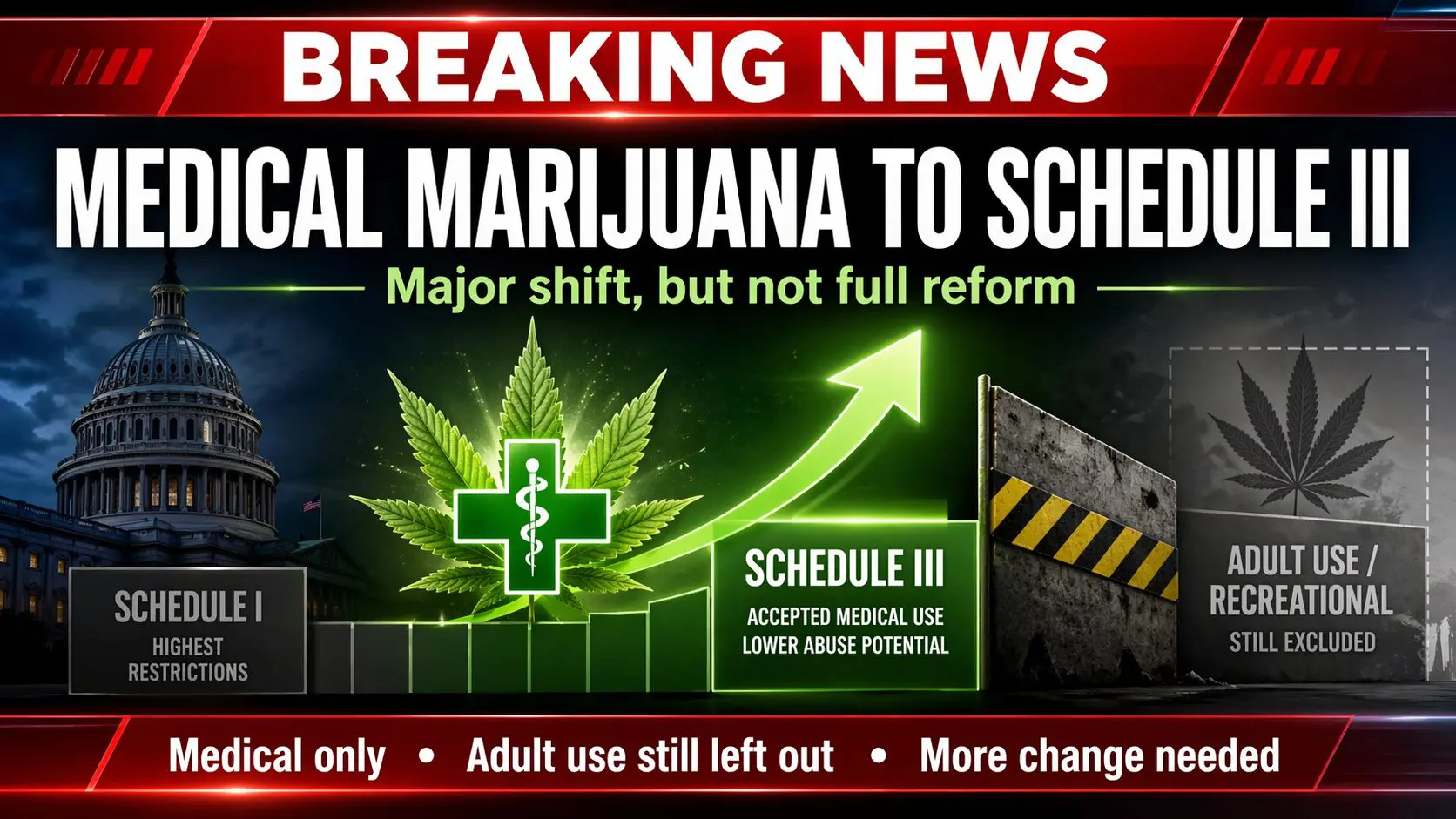
Trump Administration Moves State-Licensed Medical Marijuana to Schedule III
- Noel Abbott

The Trump administration on Thursday moved FDA-approved marijuana products and [...]

Federal Bill Would Require Data Collection on Cannabis-Related Medicaid Spending
- TG Branfalt

A federal bill introduced on Monday would require the Secretary of Health [...]

Cannabis Use Rates By Minnesota Teens Dropped from 2013 to…
- TG Branfalt

Past-year teen cannabis use in Minnesota dropped sharply from 2013 to 2025, [...]

©2026 Texas Hemp Reporter LLC

1104 S. Mays Ave # 208 • Round Rock TX 78664 • 512-387-3377 • 512-897-7823 • texashempreporter@gmail.com