Michael Weinstein is tapping into hemp’s healing power by crafting savory CBD-infused concoctions
After spending more than a quarter-century as a chef in the Dallas area, Michael Weinstein is making a name for himself as an award-winning hemp chef.
“When my dog got diagnosed with arthritis in both of his back legs, I infused (CBD) into some oil for my dog,” he said. “I started noticing a difference in him getting up and down and thought, ‘Maybe I could use my food knowledge in other ways.’”
His belief in the healing power of CBD was strengthened after his mother used a topical on her back.
“The first time she put it on, the pain subsided on her back,” he said. “Stuff like that makes you go, ‘Hmmm … maybe there is something going on with this.’”
Weinstein said he attended several Cannabis Cup events, and when Texas legalized hemp in 2019, he decided to monetize his knowledge of hemp-infused cuisine. Currently, his product line includes a variety of dessert salsas and caramels, as well as an edible intimacy serum that he said helps to ease menstrual cramps.
“I didn’t want to make gummies because they’re too trendy. I personally don’t even like gummies,” he said.
Weinstein uses a commercial kitchen to create all of his products and gets them third-party tested. He said takes pride in the quality and cleanliness of his concoctions, as they do not contain preservatives, food coloring or high fructose corn syrup.
“You can read the ingredients without using a dictionary,” he said. “High fructose corn syrup has led to the obesity of America because it’s a cheap sweetener. Why not use real sweeteners like sugar and honey?”
Currently, Weinstein is educating people at cooking classes, where he teaches attendees how to make specialty items — like CBD-infused deviled eggs.
“What I’m trying to teach people is if they want to go to the shows and buy flower, and they don’t want to smoke it, how can they infuse it and turn it into a food product? I try to keep it pretty simple and not over-complicated, as we chefs can get complicated with some of the recipes we make. I’m trying to gear (the classes) for the home cook.”
As far as upcoming products, Weinstein didn’t want to give too much away about what’s in the pipeline, but he offered a few hints.
“It’s kind of like a cracker or vanilla wafer, and it’s savory as far as texture. But there’s also cheese involved,” he said.
Dogs. We feed them, love them and keep them healthy. But what about the things we can’t control? A thunderstorm or the sound of fireworks outside of your house could make for a frenetic evening for your pet. You want to do whatever you can to soothe them.
Tracy Fleming, owner and operator of Beautiful Me Skincare Studio in Austin, tells us about her best friend, Snoodles.
“We got Snoodles when he was just barely old enough that you can adopt them. He was not even a foot long, you put him on the ground and he would literally JUMP over grass that was 3 inches long, like he was a little rabbit. He’s ¾ long-haired chihuahua and ¼ Shih Tzu. He is so sweet, he loves everybody, even children. We give him 50 power-kisses every day on his cheek and he’s not disturbed, he just kind of rolls his eyes. I was a single mother and I was looking for a dog. My daughter wanted a chihuahua she could dress up because we had just watched Beverly Hills Chihuahua. When we got him, his name was Snickerdoodle. He was the only boy left and he had the most personality of all of them.
“Snoodles freaks out when there’s thunder, lightning, storms, any kind of loud noises, even dings and beeps. Anything like that freaks him out, he shakes like a leaf! I mean, I’m talking tongue out, drooling, eyes completely dilated, shaking, crazy. We use a hemp extract from HealthQuesthemp.com, owned by Austinite Brendan Findlay. What’s cool is that they do CO2
extraction and they have a 3rd party that tests the profile and potency of all of the products. Their farm is in Colorado and everything is grown without pesticides. He really benefited from the product. We were under full-cannon, fireworks, holding him, and he wasn’t even shaking! That was when I knew that stuff was special. We just put a few drops of the liquid tincture on his paw and he licks it up. It takes about 10-15 minutes to kick in and then he starts chilling out and relaxing. What’s great about the tincture is that you can put it on any type of dog treat, or in their food or water, but putting it on their paw guarantees that they’re going to consume it. It’s a natural reaction for the dog to want to get it off by licking it.
“He’s 11 years old now. He lives with four cats who clean him, and he takes care of their ears, it is so cute! He is happy and very spoiled, of course!”
Delta-8 and smokable flower are keeping many of the states hemp farmers busy in recent months. After several regulatory loopholes and a DSHS lawsuit the state has allowed for Delta-8 to be sold legally in Texas, but not without some confusion. Delta-8 is a legal cannabis product that comes from hemp but can still give the consumer a light psychotropic high entirely on its own. Many states have issued restrictions around the product, usually states with a strong cannabis market in place, while others simply ignore it altogether. Nonetheless, a high demand for hemp flower has been a lifeline to growers who planted hundreds of acres nationally in 2019 expecting a boost in CBD products, only to see the market prices plummet after a year of over production in many states.
According to Green Market Report, Hemp Benchmarks reported that after rising 4% in May 2021, the average cost per-kilogram price for delta-8 THC distillate fell 1% in June to $1,215. “Notably, both the low and high ends of observed transaction data – $900 and $1,650 per kilogram – were up compared to May.” In Georgia, Reginald Reese of Green Toad Hemp Farm told Hemp Benchmarks that delta-8 THC was here to stay. “The beauty of it is, Georgia [like Texas,] refused the [delta-8] ban,” he said. “We have the right as licensed hemp growers to use every part of that hemp.” Reese spoke to Hemp Benchmark saying that efforts to ban delta-8 THC are part of a “full-court press” from the businesses participating in licensed, state-legal marijuana industries, which do not want the competition.
But that isn’t a problem in many states like Texas who have a fledging small cannabis program for 1% medical marijuana anyway. This has created a boom in Delta 8 sales across Texas and many other states.
Growing Smokable Flower
The Hemp Benchmark report stated“the study has documented over 168.2 million square feet registered for indoor or greenhouse production. This figure is up 328% compared to over 39.5 million square feet recorded in June 2020 and up 85% from over 90.8 million square feet ultimately documented by the end of last year.”
Nationally, and here in Texas, it seems that many outdoor grow operations have focused growing more greenhouse and indoor operations to fulfill the smokable flower demand. The Benchmark Report reported that smokable CBD Flower has continued to hold its value in the U.S. hemp wholesale market better than perhaps any other hemp-CBD product. “Flower grown indoors or in greenhouses also typically commands a premium price compared to that cultivated outdoors.” The study also concluded that flower prices leveled in June of last year around $300/pound that May. “Despite some reports of still-stagnant demand for CBG, the price for smokable CBG Flower rose 15% in June to average $326 per pound, exceeding the price for its CBD counterpart. The significant increase in the assessed price for CBG Flower this month follows an over 50% jump observed in May.”
If these indications from last years numbers continue to move in the upper mid $300-$400 range, then these are significant numbers that is welcomed news for most indoor farmers growing smokable flower.
Industrial Hemp in Texas
Since Hemp is regulated by the Texas Department of Agriculture, TDA, and THC tested for psychoactive properties. Most of our readers know already that a hemp crop with THC levels above 0.3% will be impounded and destroyed, so growers are mindfully cautious to not allow a mature rate over these levels. “As an alternative crop, the hemp industry in Texas is still in its infancy,” Calvin Trostle, Ph.D., AgriLife Extension agronomist and statewide hemp specialist in Lubbock told AgriLife Today “There is a massive amount of education going on, but we’re still trying to determine what varieties are adaptive so that we can help producers avoid headaches.” Trostle also noted that it doesn’t take a lot of acreage to mass produce CBD into small outputs for the retail and wholesale market. “It doesn’t take many acres to produce CBD for the end-product,” Trostle said. “Around 25 acres producing average yields can fill 1 million bottles that contain about 1 gram of CBD.”
Hopefully fiber will begin to expand here in Texas in the coming years. However, Trostle describes Texas conditions present problems for some growers. “The challenge we are trying to address in fiber and grain varieties is that most types are adapted to latitudes further north – Canada, Ukraine, Poland, France – and are very photo-period sensitive,” he said. “It’s not the heat units and sun they need like cotton, it’s longer summer days for growth and then increasing length of night to trigger reproduction. Plant reproduction is triggered far too early this far south.”
As for industrial production for hemp – fiber or grain, the main challenge we see here in Texas is that it will still be some time before established processing facilities are developed, and a boost of financial investment
The recent string of good news for hemp-related businesses started with the 2018 Farm Bill, which removed hemp (defined as cannabis with up to 0.3% THC) from Schedule I controlled substances and making it an ordinary agricultural commodity. Financial institutions can now bank hemp-related businesses in states that have the appropriate infrastructure in place to comply with the provisions of the Farm Bill. Good news if you’re looking for a hemp friendly bank, right? Lots of financial opportunities.
But also, lots of potential confusion over rules and regulations.
Unfortunately, we’ve seen this in action as farmers and other hemp-related businesses have been dropped by their banks across the country. Even long-term relationships have ended with banks kicking customers out because of what they see as potentially risky situations.
Where most banks go wrong is by following a “Don’t Ask, Don’t Tell” approach. They think that if they don’t know what their customers are doing, right or wrong, then the risks can’t hurt them. This strategy is just waiting to backfire. Of course, they’ll find out what they didn’t want to know, and have to write their customers a check and tell them to leave. It’s a good way to get into trouble and a terrible way to partner with customers.
Financial institutions are not exempt from having internal controls in place to determine the risk profile of the entity based on the nature of the business. This is especially true in the rapidly growing world of hemp-related businesses, where having those controls is key to ensuring businesses can bank safely. How do you make it more likely to bank successfully?
A.S.K. (Always Seek Knowledge)
What questions should you ask to gain that knowledge? Let’s look at five you should be asking your financial institution to make sure you’re banking hemp safely.
1. Does your bank have a dedicated hemp vertical with dedicated hemp subject matter experts?
A hemp friendly bank may have a “hemp person,” intended to meet all the needs of their hemp-related customers. What if that person gets stuck in traffic, or gets the flu, or is too darn busy being the only hemp person to properly serve their customers, let alone keep up with all of the constantly evolving regulations?
To really be able to partner with their customers in this ever-changing environment, a bank needs to have an entire vertical with people solely dedicated to hemp-related businesses. And those people need to be experts on hemp. Does your bank have just a toe in the water or are they all in? Do they have a policy for lending or taking deposits in the hemp space? Is their leadership not only on-board, but have they also accumulated the necessary knowledge and embraced banking hemp? If any of the above is a “no”, banking with them should be a no-go.
2. Has your bank written a compliance program?
The worst answer here would be, “What’s a compliance program?” Just as bad would be, “That’s a good idea! They should do that!” Yes, they should. Just being aware of compliance doesn’t come close. Knowing compliance rules isn’t good enough either.
To really bank hemp safely, your financial institution needs to create a compliance program that demonstrates mastery of the rules and regulations. Being fully compliant is crucial to having a successful business and your bank should help you get there.
3. Is your hemp friendly bank vetting you or just inviting you?
Since the dawn of time, banks have wanted your money. More money is better, no questions asked. Until now. When it comes to banking hemp safely, the best thing a hemp friendly bank can do for you is to make sure you’re as good a partner for them as they will be for you. They should want you as customers for the relationship you can develop as much as for the money you can deposit.
If your bank is ushering in your business down a red-carpet flush with rose petals, be wary. For your safety, they should be carefully vetting you. It can only help your business, and with the current challenges in the market, it’s what a true partnership needs to flourish.
Business cannabis stock leaves marijuana success market price green profit growth charts graph money display screen up industry trend grow higher quickly
4. What hard questions are they asking you?
Are they asking to see your testing samples? Your disposal procedures? Your COA? Your license? Are they asking you if you’re up to speed on the latest regulations? Are they asking if you have a safety and security plan in place that is accessible to employees? Are they doing the research to ensure your business has no operational ties to marijuana-related businesses?
If they’re asking these questions, it may not be the easiest thing for you, but it’s the best thing for you. They’re watching out for you. If they’re not, they might be honing their “Don’t Ask, Don’t Tell” skills. Or they may not even know the right questions to ask. Neither is good.
5. How well does your bank know your business?
It’s important to remember the good things that come from business partners really knowing each other. There’s a difference when a bank has deeply researched your business, the competition, and the overall category; when they’ve been to your place of business, sometimes traveling long distances to be there; when your connection to them is more relational than transactional.
We’d even go so far as to say that they should feel some ownership in your business. They don’t actually, but it should feel that way, like they’re a true partner and not just a place to put your money.
You’re putting a lot out there: your reputation, your hard work, your good name, your funding. The least your bank could do is make sure you’re banking safely. To that end, we’ll leave you with one thought:
When it comes to your hemp-related business, make sure your bank is S.A.F.E: Staffed with Subject matter experts who are All in, Fully compliant at Every level.
The key to certainty? Ask them. Follow the advice of the classic Chinese proverb:
“He who asks a question remains a fool for five minutes. He who does not ask remains a fool forever.”
Appropriately enough on 4/20/2021, MTV launched the documentary Going to Pot: The Highs and Lows of It on the streaming service Paramount +. As a lighter infotainment piece, the film touches on the “411 on 4/20” exploring cannabis based accounts throughout it’s history as well as debunks some popular myths and questions one may have about the plant.
Filmmakers and co-producers Fenton Bailey & Randy Barbato (World of Wonder Productions) co-directed the 73 minute documentary which is broken up into smaller vignettes of pot-based programming featuring accounts on everything from the history of the 4/20 lexicon to answering questions like “Can I really get a contact high?” into mini-biopics of notable marijuana advocates in pop culture like University of Texas and NFL alum Ricky Williams.
It plays out more like a suburban anti-propaganda education piece than a highly informational look into marijuana but aptly serves its purpose as a documentary showcasing much of the outline of pot FAQs that have generally plagued our popular culture in the past. Not to mention, it’s backed by a strong advisory panel including psychopharmacologists and integrative psychologists, cannabis attorneys, and investigative journalists which lends more credibility to the facts presented to those newer to the matter.
Writer Jim Fraenkel brings a lot of his MTV True Life influence to Going to Pot, following the topic of weed through a brief portrait of its existence andrefiningmore of the impact and positive influence it has had in it’s reintroduction. While a cannabis connoisseur might not gain a lot of new information in the hour-ish view, the featured pot personas show a firsthand glance into the innovation in the industry and where the room for expansion lies with the continuation of positive documentation of cannabis culture such as this.
Perhaps you’ve just entered the market for Texas Hemponomics or maybe you’re a veteran in the field already. Whichever one you are, here are 10 Texas Hemp Labs you can keep an eye on.
The list is not all inclusive, and is listed in alphabetical order. These are labs that are showing up to conventions and trade shows to showcase their abilities.
ABS LABS, LLC
In 2018 ABS launched cannabis testing consulting services, providing licensed laboratories throughout North America access to innovative, compliant cannabis analytical methods, laboratory support, and leading testing technologies. AS of today ABS continues research and development for new applications in environmental sciences and healthcare, meeting the demand for accessible, innovative solutions ABS is headquartered in the Dallas, Texas metroplex area of Carrollton. For more information and how to get in contact with them visit https://altbio.com/abs-labs/ or call (972) 241-1388
cannabis oil cbd
ANALYTICAL FOOD LABORATORIES, INC.
Founded over 25 years ago, in 2018, AFL joined the Tentamus Group, which was founded a decade ago, providing clients access to a global network of labs. Accredited and licensed Tentamus Group tests, audits and consults on all products involving the human body. Tentamus Group is represented in over 50 locations worldwide with more than 2,500 highly-trained staff members working in over 2 million square feet of laboratory and office spaces.
AFL can assist you with product analysis and development, trouble-shooting, quality assurance and compliance issues. Routine laboratory analysis is offered on a per test basis and to meet customer needs. AFL is an ISO 17025 accredited lab, and also holds accreditations with USDA, NELAC/NELAP and is registered with the FDA. Procedures comply with official methodologies including FDA, USDA, AACC, AOAC, AOCS, ASTA, EPA AND USP.
AFL is located in Grand Prairie, Texas. For more information about AFL, visit https://www.afltexas.com/ or contact afl@afltexas.com – 972-336-0336
BLUEBONNET LABS
Bluebonnet Labs had the honor this past year to be the official lab for testing of the submissions entered into the 3rd annual (2021) Texas Hemp Awards. BL has been serving the hemp community since 2020. Bluebonnet labs yields a quantitative analysis to determine the potency of Cannabinoids and Terpenes. Contaminants such as Pesticides, Heavy Metals, Residual Solvents, Microbiological and Mycotoxins are carefully analyzed using baseline values established as unsafe or harmful and reported to a high level of accuracy.
BL offers cannabinoid potency testing, residual solvent testing, pesticide testing, microbiological testing, terpene testing, heavy metal testing, mycotoxins testing, along with filth and foreign material inspections. BL is AL2A certified and ILAC MRA accredited.
Eastex has been in the laboratory game since 1986. Eastex Environmental Laboratory is 100% employee owned – and they feel that ownership of their name, their quality of work, and their relationships is what sets them apart from the competition. Eastex offers along with hemp testing, (surface & core) complete soil evaluation of surface and subsurface samples per customer specifications, ground water evaluations of wells and public water systems, and water quality of lakes, ponds and creeks among other items.
EEL is Accredited for Chemical Sampling through the Perry Johnson Laboratory Accreditation, Inc. ALong with their various testing packages, Eastex provides some consultation work to help ensure farmers are getting the most out of their time with their crops.
EEL has two locations in Texas, one in Coldspring and the other in Nacogdoches. For more information visit hemp.eastexlabs.com and https://www.eastexlabs.com/ 936-653-3249 hemp@eastexlabs.com
IONIZATION LABS
Founded by Cree-Crawford, Ionization Labs is the testing service used by the Texas A&M Agrilife Extensions Hemp Program. Ionization Labs is an ISO-17025 Accredited Potency Testing Lab and AL2A certified.The unique thing about Ionization Labs is their CANN-ID testing system which allows for farm to market in-house testing along with lab verification upon sending in samples.
This allows for anyone partnering with Ionization labs to test their products immediately upon either harvest in hand or on the shelf products to initially know what they really have. From there an official sample is sent to Ionization Labs and their team verifies the results. This eliminates having to send multiple samples over and over and wait for turnaround. Just test the samples you want to test and send in the ones you desire for verification.
Ionization Labs is headquartered in Austin, Texas and can be reached at 737-231-0772 or find them online at https://ionizationlabs.com/
KJ SCIENTIFIC INDEPENDENT TESTING LABS
KJ Scientific LLC is a certified Woman Owned Small Business (WOSB) and Historically Underutilized Business (HUB) with a global reach. KJ Scientific was founded with a mission of ensuring human and environmental health through rigorous testing and analysis of the chemicals and products introduced to the market. To uphold these high standards, they became the first product testing lab in the world to exclusively use new, innovative in-vitro technology in their chemical testing products and services outside of the hemp sphere.
KJ Scientific utilizes advanced chromatographic instrumentation and detection techniques to test and analyze each sample to ensure they’re legally compliant and safe for market consumption. Consulting and Direction – their services cover every aspect of vertical production of CBD from extraction to final validation for the market. KJ Scientific is part of the National Environmental Laboratory Accreditation Program (NELAP) and has ISO/IEC 17025 certification.
Founded by Jesse and John Kerns, New Bloom originated in Tennessee and expanded into Texas once the state passed it’s hemp program in 2019. The lab is ISO/IEC 17025:2017 certified. NBL is capable of testing plant material, crude oil,concentrates, isolate, distillate, kief, topicals and ingestibles.
NBL built an entire customer service department in their company. What this means is that their dialogue with their customer doesn’t end when they deliver a certificate of analysis. Instead, when a client needs a consultation or help interpreting results both their customer service team, as well as technical staff are available to help consult you on your results. NBL also commonly helps customers create a testing and compliance program that’s the right size for their business. Not everyone needs to test as much as some others might. NBL will help you identify your best practice needs for testing crops and products, and keep you from ordering unnecessary testing.
Santé Laboratories is an Accredited Hemp Testing Laboratory in the State of Texas. Santé Laboratories has a combined 35 years of experience in analytical chemistry, drug development and pharmaceutical sciences. Santé is committed to serving the hemp and CBD industry safeguarding all end-users through premium, high quality, and transparent testing. Santé Laboratories is currently holding the ISO/IEC 17025:2017 accreditation.
Regardless of phase in development and borrowing from relevant expertise in cannabinoid formulation sciences, Santé Laboratories can provide flexible drug delivery and manufacturing solutions to overcome solubility, room temperature stability, and absorption challenges to quickly transition into the clinic. In addition to leveraging the lipid-based nanoparticle delivery system, Santé Laboratories can perform rapid formulation screening studies which can be developed into candidate formulations to be evaluated in nonclinical and first-in-man studies.
Sante Labs is located in Austin, Texas. For more information on their lineup of services visit http://www.santelabs.com/ or contact them at 512-800-9117 and http://www.santelabs.com/
TPS refers to their business as “Your Crop’s Dieticians.” TPS Labs has been operating in Texas since 1938 and helping farmers in various fields of vegative growth during that time. TPS Labs are one of only a few labs in the world that still use CO2 extraction to test nutrient availability. This process is very labor-intensive but mimics how plant roots extract nutrients from the soil, stating that’s why it produces the best results.
Growers utilizing TPS Labs HEMPlan will have a complete picture of what soil nutrients are immediately available and what’s in reserve. Customized fertility recommendations will show customers how to correct deficiencies, and sustainable practice recommendations will show them how to unlock tied up nutrient reserves.
TPS Labs’ program gives growers an edge over the competition by providing advanced notification of possible heavy metal contamination in their soil. They perform a complete 32 element heavy metal analysis on your soil to make you aware of any potential problems.
TPS Labs is located Edinburg, Texas. For more information visit https://www.tpslab.com/hemplan or contact them at 956-383-0739 or info@tpslab.com
Veterans Scientific has the honor of winning the best Texas-based Hemp Ancillary Support or Services category for the 3rd Annual (2021) Texas Hemp Awards. VSL was co-founded by Garvin Beach, B.A.S. and is currently led by James W. Johnson Jr as the CEO. Both gentleman are Air Force Veterans working in the cannabis space today.
VSL offers potency testing, moisture content, heavy metals, aerobic plate count, staph auerues, water activity, pesticides, coliforms/E Coli, yeast/mold, terpenes, residual solvents salmonella SPP, mycotoxins on hemp/cbd products. VSL also offers a line of fiber testing on hemp products.
Veterans Scientific Laboratories is located in San Antonio, Texas. For more information visit http://www.vetscilabs.com/ or contact them at 210-682-9883 or info@vetscilabs.com
Running for office in a democratic nation is one means through which you can throw in your lot and take a shot at effectuating change. However, achieving success in such an endeavor often requires the exchanging of one’s ideals for cash and capital, as we explored in my previous article about lobbying.
If a candidate needs a certain amount of cash to achieve their objectives, and the only way to access that cash is by making concessions and promises, well then, a candidate isn’t really running on their own platform are they?
Candidates’ platforms are built atop the stacks of cash, or bands if they’re lucky, that are provided by donors, and that capital comes with caveats. (For those not in the know concerning street terms applied to cold hard cash, a “stack” is a thousand dollars, while a “band” is ten thousand dollars.)
To explore how lobby money and the pro-cannabis position of a candidate interplay, I made an attempt to present you with an interview featuring an individual running for the U.S. House of Representatives, to represent a Congressional District of Texas.
Will Texas come around before Washington when it comes to cannabis?
When they had an opportunity to receive a gratis consultation from me on how cannabis can help their campaign, they were motivated to schedule the taking of my time. When I presented them with an opportunity to explain how they will help cannabis if their campaign is successful, they did not give us any of their time to explain why.
Following is a script of questions I suggest you present to any politician that tells you they are fighting for cannabis and want to use cannabis to bolster their platform. If they answer, get their permission to send it to me for prospective publication in a future issue of THR. Adjust the terms in brackets as needed for the politician you are presenting the questions to.
1-In 100 words or less, let us know the platform of your campaign, and where cannabis fits in.
2-What is your position on cannabis in Texas?
3-What is your position on cannabis nationally?
4-What can a member of [the U.S. House of Representatives] do to support cannabis?
5-Would the [U.S. Representative from the 21st Congressional District] in Texas have any sway or influence concerning where the TX State Legislature goes with cannabis in 2023?
6-How much money does it cost to mount a campaign for the [U.S. House of Representatives]?
7-If/when you take a few stacks or even a band from a donor, how bound do you feel to their ideology?
8-How does a lobbyist make you understand that the money you are receiving is conditioned on you voting a certain way?
9-If, for example, a “national” cannabis advocacy group founded by a Colorado law firm funded by Colorado cannabis companies were to offer $50,000 towards your campaign on the condition that you oppose micro-grower licenses and support high barriers to entry in the eventual Texan recreational cannabis market, so that the Colorado cannabis companies can wedge their way into then conquer our market, would you accept it? What factors would you consider before deciding?
10-What do you think Texans can do today to advance recreational cannabis tomorrow?
Well reader, there you have it, some data about how lobbying and politics interplay in the cannasphere, and how that might affect where Texas is going in that regard. Keep this in mind as you take the proactive approach. Reach out to your representatives and communicate your desire for recreational cannabis, micro-grower licenses, and the option to self-cultivate. Lounging on leather, seat back on recline watching the world pass by does have its appeal, however, doing so with legal recreational cannabis would be exponentially more appealing. Let’s do this, Texas.
The activist-led push to legalize marijuana in Oklahoma has become seriously contentious, with one campaign waging a legal challenge against a separate group of advocates working to end prohibition. The latest result of the conflict is the filing on Wednesday of a newly revised initiative to put legalization on the ballot.
The new measure comes from a campaign that’s being backed by the national New Approach PAC, which has been behind a number of successful state-level reform initiatives across the country. It filed its first 2022 Oklahoma legalization measure last month before facing the legal challenge from other activists over statutory concerns.
Money with sheet of marijuana close-up on background of one hundred dollars with an artificial ray of light, high quality image. Thematic photos of hemp and cannabis
The separate campaign, Oklahomans for Responsible Cannabis Action (ORCA), contested the prior New Approach measure with the state Supreme Court late last month, arguing that, among other things, the competing initiative violated a single subject rule for ballot proposals. It argued that the measure covers too many policies beyond simple legalization, which they say should render the initiative invalid.
But while ORCA chose to make that argument, its own initiative also covers significant ground. As filed, for example, both would provide pathways for expungements of prior cannabis convictions. That’s changed now in the latest New Approach-backed measure, and if the legal challenge against the prior measure goes forward and is successful, the initial draft would be rendered ineligible for the ballot and New Approach would pursue their second version.
Enter the new initiative from New Approach: This one makes technical changes to the gist and ballot title language to more closely align some of the provisions that were challenged. It also eliminates the expungements section to avoid a further legal contest based on the single subject rule.
ORCA, meanwhile, filed its own pair of 2022 ballot initiatives late last year to legalize adult-use marijuana and remodel the state’s existing medical cannabis program. Jed Green, director of ORCA, told Marijuana Moment on Wednesday that he feels the original New Approach initiative is “just the wrong approach for Oklahoma.”
Among the issues that Green discussed in his challenge with the state Supreme Court, he alleged that the gist and ballot titles were inconsistent when it comes to jurisdictional authority over regulations, taxing and expungements.
The new New Approach filing now specifically excludes expungements, meaning only its prior version and Green’s active measure contain the provision that he took issue with in the court filing.
“We’ve got similar [expungements] language to what, in theory, we’re challenging in [New Approach’s State Question 820]. But there is a difference,” he told Marijuana Moment. “The criminal justice reforms and restorative justice is much more potent in [ORCA’s initiatives] than it is in 820.”
“The real difference here between the two is that where 820 goes further, it actually prescribes judicial processes,” Green said. “819, on the subject of retroactivity, simply says, ‘Okay, this can be done retroactively, you know, these expungements can happen.’”
Michelle Tilley, the official proponent of the New Approach-backed initiatives, told Marijuana Moment that it’s “disappointing” Green’s campaign would “mischaracterize” the provisions of her measure.
“Their claims about SQ 820 are purely political and have nothing to do with the actual language of SQ 820 or whether SQ 820 will survive this protest, which we firmly believe it will,” she said. “However, the political games the 818/819 are playing have forced us to file another measure as insurance against the unlikely event SQ 820 does not proceed to the signature collection phase.”
“The supporters of SQ 820 trust that the courts and ultimately the voters of Oklahoma will see through the efforts of the 818/819 campaign to prevent Oklahomans from considering the important and sensible reforms in SQ 820,” Tilley said.
Meanwhile, ORCA’s own proposals have separately faced legal challenges filed by yet another cannabis activist in the state.
When it comes to Green’s challenge to the New Approach measure, it says that the “obvious intent is to create two separate descriptions of [the initiative] for the purpose of gathering support between two targeted demographic groups.” It adds that the “gist is written to appeal to Oklahomans most likely to sign the document for ballot access” and “the ballot title is written to appeal to a broader group of Oklahomans at the ballot box.”
Green said that the intent of the legal challenge to the New Approach initiative wasn’t to create barriers to reform from a competing campaign. And he said that he’d still be open to coordinating with activists behind the other reform push, despite having instigated this legal review.
“We’re not just assholes that like challenging or fighting our own people,” he said. “That needs be clear.”
However, he said that “what it really comes down to is, at the end of the day, in order to have the best shot of being on the ballot in November, one side has to yield to the other.”
Under ORCA’s recreational legalization proposal, adults 21 and older would be able to possess up to eight ounces of marijuana that they purchase from retailers, as well as whatever cannabis they yield from growing up to 12 plants for personal use.
Marijuana sales would be subject to a 15 percent excise tax, and the initiative outlines a number of programs that would receive partial revenue from those taxes. The money would first cover implementation costs and then would be divided to support water-related infrastructure, people with disabilities, substance misuse treatment, law enforcement training, cannabis research and more.
The measure also lays out pathways for resentencing and expungements for those with marijuana convictions.
Meanwhile, the New Approach initiative would allow adults 21 and older to purchase and possess up to one ounce of cannabis, grow up to six mature plants and six seedings for personal use. The current Oklahoma Medical Marijuana Authority would be responsible for regulating the program and issuing cannabis business licenses.
A 15 percent excise tax would be imposed on adult-use marijuana products, with revenue going to an “Oklahoma Marijuana Revenue Trust Fund.”
The funds would first cover the cost of administrating the program and the rest would be divided between municipalities where the sales occurred (10 percent), the State Judicial Revolving Fund (10 percent), the general fund (30 percent), public education grants (30 percent) and grants for programs involved in substance misuse treatment and prevention (20 percent).
Nothing about these key provisions was materially changed in the latest filing, except for the lack of an expungement pathway in light of Green’s challenge to the prior version.
Oklahoma voters approved medical cannabis legalization at the ballot in 2018. Unlike many state medical marijuana programs, it does not require patients have any specific qualifying conditions; doctors can recommend cannabis for any condition they see fit.
Gov. Kevin Stitt (R) claimed in his State of the State speech on Monday that voters were mislead when they passed the initiative to legalize medical marijuana in the state, arguing that the measure may require legislative reform.
The governor said that the ballot question passed by voters “was misleading, and it has tied our hands as we regulate the industry.”
Meanwhile, two Republican Oklahoma lawmakers are also looking into broader drug policy reform, recently filing bills meant to promote research into the therapeutic potential of psilocybin, and one of the measures would further decriminalize low-level possession of the psychedelic.
The Spring Edition of the Texas Hemp Reporter profiles Texas Lab Testing that we recommend , a History of the 420 in pop-culture, The East Austin CBD Crawl, CBD & Pets, meet the new faces of the Texas Legislature. Will a “Changing of the Guard” improve cannabis law reform in the Lone Star State? Also banking and Hemp, Actor Jason Gann of “Wilfred”, Dispensary Etiquette, the top 10 labs you should know about in Texas and more.
3THE NEW ISSUE WILL BE AVAILABLE ACROSS THE STATE AFTER APRIL 3RD
Business Conference and Investment Summit March 24
Join us for the NoCo Hemp Expo Business Conference and Investment Summit — an exclusive one-day event featuring company founders and CEOs, industry leaders and experts, qualified and accredited investors, analysts, and financial professionals. At the Summit, we’ll cover the current hemp business and investment landscape, insights on trends and strategies, the global market, and evaluating opportunities for the future.
Farm Symposium & Ag Tech Forum March 25
The NoCo Farm Symposium & Ag Tech Forum will present what’s next for hemp farmers and is dedicated to helping educate producers about the agribusiness of hemp and cannabis-related agriculture. Topics will range from regenerative-organic techniques, soil health, genetics, harvesting and processing innovations, new technology and equipment, updated regulations and compliance rules from the USDA, FDA, state departments of agriculture and other issuing authorities, and more.
The WAFBA Awards of Excellence Dinner and Other Special Networking Events
This year’s NoCO8 will debut a new WAFBA Awards of Excellence Dinner on March 24 to recognize hemp industry founders and innovators of distinction. In addition, NoCo8 will present a Kickoff Conversation and Welcome Reception on March 23. Capping off the event, NoCo8 producer Colorado Hemp Company invites all attendees to its 10th Anniversary Celebration & After Party!
In late January, the U.S. Court of Appeals for the First Circuit issued its opinion in United States v. Bilodeau, 2022 WL 225333 (1st Cir., Jan. 26, 2022), a case involving two marijuana growers from Maine who were indicted by the federal Department of Justice (DOJ) on charges of violating the Controlled Substances Act (CSA). The growers were operating three facilities in Maine where they grew and/or distributed marijuana, purportedly as registered caregivers to qualified patients, which is legal under Maine’s medical marijuana laws. The growers maintained “facially valid documents” demonstrating their compliance with such laws.
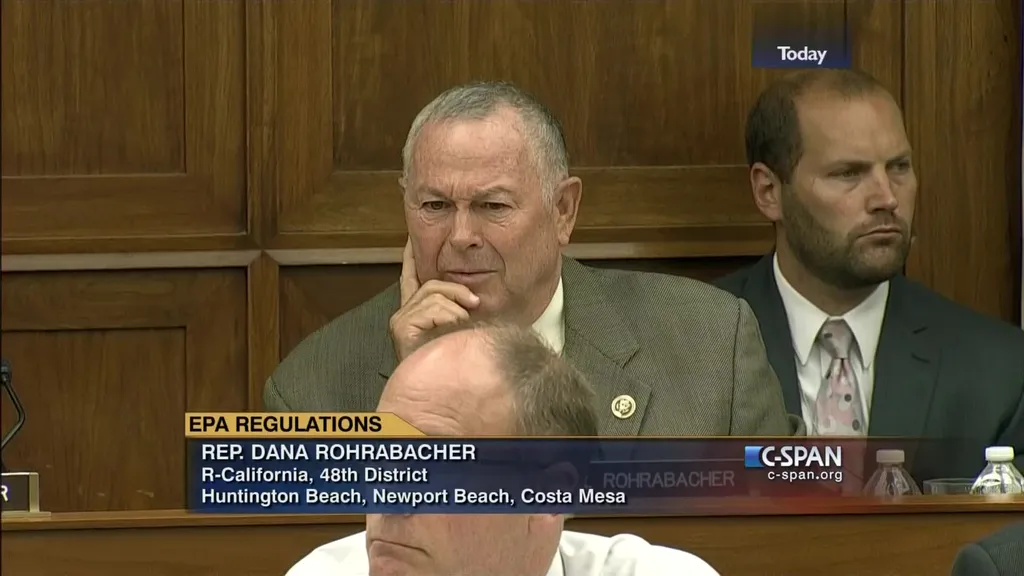
However, after an investigation into the growers’ operation, federal agents executed search warrants for two of the growers’ facilities and subsequently indicted the growers for, among other things, “knowing and intentional manufacture and possession of marijuana with intent to distribute in violation of the CSA and conspiracy to do the same.” The growers then petitioned the U.S. District Court for the District of Maine for an injunction preventing the federal government from proceeding with the prosecutions, arguing that the Rohrabacher amendment prohibited the use of federal funds for such an endeavor.
Rohrabacher’s Practical Limit on Prosecution
The Rohrabacher amendment, named for former US Representative for California’s 48th district Dana Rohrabacher, is a rider that has been attached to Congress’ annual appropriations bill every year since 2015. The amendment stipulates that none of the funds made available to the DOJ under Congress’ annual appropriations bills may be used to prevent any of the fifty states from “implementing their own laws that authorize the use, distribution, possession, or cultivation of medical marijuana.” As stated by the First Circuit, the Rohrabacher amendment “places a practical limit on federal prosecutors’ ability to enforce the CSA with respect to certain conduct involving medical marijuana.”
The growers asserted that, pursuant to the Rohrabacher amendment, the DOJ could not use federal funds to prosecute them for violating the CSA. They argued that because their allegedly illegal activities were authorized under Maine’s medical marijuana laws, a prosecution for such activities would therefore amount to the DOJ effectively preventing Maine from implementing its own laws authorizing the cultivation and distribution of medical marijuana. The District Court did not agree with the growers, however, and ruled that the prosecution of all counts against them could proceed. The court premised this decision on its finding that the growers were “patently out of compliance” with Maine’s medical marijuana laws and were instead “part of a ‘large-scale… black-market marijuana operation’” that was clearly not authorized by such laws. The growers then appealed the Court’s decision to the U.S. Court of Appeals for the First Circuit.
A Nuanced Interpretation of Rohrabacher
In hearing the interlocutory appeal, the First Circuit became only the second of the federal circuit courts to interpret the Rohrabacher amendment, following the Ninth Circuit’s 2016 decision in United States v. McIntosh, 833 F.3d 1163. In its opinion, the First Circuit began by agreeing with the Ninth Circuit’s reading of the amendment and its conclusion that “the DOJ may not spend funds to bring prosecutions if doing so prevents a state from giving practical effect to its medical marijuana laws.” The First Circuit further echoed the Ninth Circuit by acknowledging that “the prosecution of persons whose conduct fully complied with” Maine’s medical marijuana laws would prevent those laws from having much practical effect, which is “precisely what the rider forbids.”
Importantly, however, the First Circuit ultimately disagreed with the Ninth Circuit regarding the circumstances under which a federal prosecution would prevent a state from giving practical effect to its medical marijuana laws. Rather than adopting the Ninth Circuit’s “strict-compliance test to differentiate between prosecutions that prevent a state’s medical marijuana laws from having practical effect and those that do not,” the First Circuit opted for a more nuanced approach. It rejected the strict-compliance test promulgated by the Ninth Circuit in McIntosh on the grounds that “the potential for technical noncompliance is real enough that no person through any reasonable effort could always assure strict compliance.”
While recognizing that the strict-compliance requirement went too far, however, the First Circuit stressed that “Congress surely did not intend for the [Rohrabacher amendment] to provide a safe harbor” to those with facially valid documents “without regard for blatantly illegitimate activity.” The First Circuit stated that in this case, the evidence clearly showed that the growers’ outward appearance of compliance with Maine’s medical marijuana laws was a façade, employed for the purposes of selling marijuana to unauthorized users. Thus, the First Circuit upheld the ruling of the District Court, affirming its denial of the growers’ motion to enjoin their prosecutions.
Impact of Bilodeau on Medical Marijuana Laws
Though the Maine growers were unsuccessful in challenging their prosecution by the DOJ under the Rohrabacher amendment, the First Circuit’s interpretation of the amendment is an important development in the field of medical marijuana law. The only previous judicial guidance regarding the application and effect of the Rohrabacher amendment, provided by the Ninth Circuit in McIntosh, stipulated that individuals involved in the cultivation and distribution of medical marijuana must strictly comply with all aspects of their state’s medical marijuana laws to avoid being prosecuted by the federal government for violations of the CSA. The First Circuit has now supplied a fresh interpretation in Bilodeau that is much friendlier to those in the medical marijuana business.
Close up of medical marijuana buds sitting medical prescription pad on black background
Under the First Circuit’s approach, one who is legally engaging in the industry under their state’s medical marijuana laws cannot be prosecuted by the DOJ for it unless their conduct rises to the level of “blatantly illegitimate activity.” If a medical marijuana grower or distributor is making a reasonable effort to comply with their state’s medical marijuana laws, they will be protected from federal prosecution by the Rohrabacher amendment, even if there are aspects of their conduct that are not in strict compliance with such laws.
Of course, it must be noted that the First Circuit’s interpretation of the Rohrabacher amendment in Bilodeau is not binding on other federal judicial circuits, nor does it provide a bright line rule. The First Circuit itself acknowledged that in “charting this middle course,” it did not “fully define [the] precise boundaries” of what types of conduct would qualify as “blatantly illegitimate activity.” The only activity that the First Circuit has clearly classified as “blatantly illegitimate” is that of the growers in Bilodeau – an operation “aimed at supplying [marijuana to] persons whom [none of the prosecuted growers] ever thought were qualifying patients under Maine law.”
Takeaways for Medical Marijuana Businesses
In light of Bilodeau, those engaging in the medical marijuana business should continue to make every effort possible to fully comply with all aspects of their state’s medical marijuana laws. Though it is promising that the First Circuit’s decision in Bilodeau interprets the Rohrabacher amendment as providing greater protection from DOJ prosecution for state-licensed medical marijuana growers and distributors, this is still a very new area of law which is rife with the possibility of conflict between the federal government and the state legislatures that have enacted statutes legalizing medical marijuana within their borders.
Those in Maine, New Hampshire, Massachusetts, Rhode Island, and Puerto Rico who are legally growing, selling, buying, or using medical marijuana under their state’s laws can take some degree of comfort in knowing that they are not likely to be federally prosecuted for minor failures to comply, so long as they are not engaging in blatantly illegitimate activity. However, those in other states should continue to err on the side of caution when it comes to strict compliance, as there is no telling whether the First Circuit’s interpretation of the Rohrabacher amendment will be adopted by other federal circuit courts.
This year has been a wild ride for hemp, and cannabis in general in Texas and it’s not going to stop for a single moment.
Our 2021 year started off with a legislature that filed quite a few cannabis related bills in the House. Penalty reduction, medical cannabis, a hemp cleanup bill were the primary topics being pushed in the 87th regular session. Texas saw weak advancement on medical progress for cannabis, no penalty reduction measures signed off because of the desire to include delta-8 language, and the hemp cleanup bill failed for the exact same reason with even more debate on that delta-8 issue.
A committee hearing saw licensed hemp agencies and advocacy groups compared to cartels during hearings. Groups were visiting offices to prevent language designed to block delta-8 from inadvertently destroying the rest of the hemp market. And DSHS testified that they were under the presumption that delta-8 was illegal regardless of what the legislature did with the cleanup bill. Delta-8 was clearly all over the place and on most of the industry’s minds.
The majority of the industry moved forward after the regular session under the presumption that delta-8 avoided a death blow. Others had seen that DSHS was making their claim in the Senate committee hearing because they had held a hearing on the topic and practically nobody knew that it happened. That meeting was to review the controlled substances schedule of Texas to oppose the carved out exemptions. Their results were something that most industry talking heads and experts said, “flipped the definition of hemp on its head.”
There is definitely a problem with delta-8 in the industry and it’s not delta-8 itself that is the problem. Delta-8 is a result of failing to pass proper cannabis regulations while passing a hemp program with no cleanup bills federally or on a state level to address gaps in that program. Itself on its own is not a reason for danger. People creating products that they claim are delta-8, that are really delta-9 are an issue.
Think they aren’t? Wait until you have to be in front of a judge arguing that you were arrested for something that isn’t what is on the label and what was in the bottle is illegal in Texas, all while you can’t get a lawyer because it’s too expensive. People creating products that have byproducts in their extracts that are not conducive to healthy human living are also a problem. A CBD Oracle Lab Study article showed some Delta-8 products are 7700% over the legal delta-9 THC limit. That last sentence, google it and have your mind blown if you didn’t already know this.
Then the icing on the cake of these issues are lab results that have been falsified possibly by the product manufactures or another party down the line after lab tests were done. Products with metals in the original testing being eradicated from the lab result altogether, along with delta-9 thc being relabeled as delta-8 or completely removed from the results as well.Retailers using one lab COA for all of their products they ship and sell over the counter is another issue. A brownie should have its own COA, a gummy should have it’s own, and a tincture should have one as well that isn’t the same COA as the hemp product placed in the item. The item itself needs a COA, not just the substance infused into the product.
This still isn’t a need to remove delta-8 or any other THC isomer from the market. Removing it from the market is a knee jerk reaction, and one that shows no true thought was put into the decision. Elected officials can claim they have put lots of thought into this, but what does it mean if their thoughts are put aside for a few higher up figures, instead of representing their constituents?
What should the state of Texas do to set an example on how to wrangle this issue? Should we have labs that are audited by the state to ensure testing is done properly? Should we ensure that any product that is placed out for retail has a lab result from a Texas lab before it can be placed on shelves or sold to Texans if they have a physical location in state (we cannot do that to a product just passing through the state, as that would likely violate interstate commerce laws)? Should QR codes lead to a website presented database that is operated by the lab instead of the retailer or the wholesaler? How many counterfeit products could be weeded out of online systems and retail shelves that plan to sell to Texas residents?
This next legislative session we can expect to see varied interests coming out on all sides, including medical marijuana that are going to have input about this, and the hemp industry needs to be ready with answers and be ready to fight for their products. We are all in this together and we all need to push the industry forward together in a healthy and responsible fashion if we want this to work.
TPS Lab, a mainstay of the Rio Grande Valley and the farming industry for over eight decades, wants to help hemp and marijuana growers achieve success and higher yield of crops. TPS Lab President Frank Schultz explains the importance of research and patience as many new farmers and entrepreneurs dip their toes into this emerging field.
Texas Hemp Reporter: How did you begin in the field of soil testing, can you give us a bit of your origin story?
TPS Lab: The lab was established in 1938 by Dr. George Schultz (no relation). I am the third-generation president and conservator of an 80-plus year-old institution, starting as a client in the early 2000s.
THR: You have clients all over the globe, but here in Texas, what would you say is the single, biggest challenge a farmer will face in terms of crop health?
TPSL: Education. We often get calls from people who say they are interested in growing hemp but it emerges during the conversation that they have done little to no research into the plant, its unique requirements, possible markets or the industry in general. Unfortunately, we have seen and heard firsthand accounts from people who lost millions of dollars due to lack of experience or faulty research. Some “bet the farm” and lost it.
Even experienced growers, from gardeners to well-established farmers, often do not appreciate the costs, infrastructure required and especially the labor-intensive nature of growing CBD industrial hemp. (We saw a reduction in hemp acres grown with our clients in 2020 from 2019, largely due to the realization of the labor required.) Additionally, experienced growers of other crops are accustomed to few changes in plant varieties and genetics year after year.
However, new hemp genetics are being developed continuously to enhance oil percentages and characteristics, and suitability for specific growing conditions and regions. This means that a grower must constantly be on the lookout for new varieties to better suit his growing conditions and accommodate dynamic market demands for the latest desired CBD isolates.
A BIG mistake some of our clients made was in retaining marijuana consultants to advise them on growing industrial hemp. With the understanding that genetics is where it all starts and is key to the capacity of cannabinoid production and composition (or lack thereof), the growing practices for each are quite opposite in several ways:
Money bag on the background of agricultural crops in the hand of the farmer. Agricultural startups. Profit from agribusiness. Lending and subsidizing farmers. Grants and support. Land value and rent.
● With marijuana, the varietal genesis is typically C. indica L., due to its penchant for producing high levels of THC. Plant stress is purposely induced during the middle and latter stages of development to further stimulate the production of THC. This is done by limiting fertilization, water, light or causing any other factor to induce stress.
● C. sativa L. is the varietal genesis of industrial hemp and typically has a lesser penchant for producing THC. However, THC production is still stimulated by plant stress. Accordingly, it is essential to limit stress in order to limit THC content to 0.3% or less to have expectations of a harvestable crop – even for sativa.
The good news is that we can do much to limit stress and encourage production of CBD by providing balanced nutrition at critical times during plant development and to at an extent, managing water. We can even compensate, to degrees, for other stressful conditions such as weather. With marijuana, stress is encouraged.
But there’s more: Because you get a harvestablecrop does not mean that you get a sellablecrop! Over the past several years, we’ve seen processor’s demands increase for percentage of CBD and even for particular isolates of CBD (CBG, CBN, etc.) – and now, ∆-8 THC (in Texas). The appropriate genetics, stress management, cultivation practice, and correct, timed nutrition and water are the answer.
THR: Can you describe your operation in Edinburg?
TPSL: We are a consulting agronomic laboratory. We’ve been in the same location for decades and have current technology analytical instruments. We are open to the public and encourage growers large and small to bring in their samples or visit with one of our consultants to get answers to their toughest questions.
The main and unique features of the lab are its proprietary methods of soil and compost testing, emulating the way plants take up nutrients in any soil type and calibrated against actual plant uptake (Plant Natural® Soil & Compost Tests); its Ask The Plant® plant sap analyses based on proprietary plant nutrition standards and its What’s In Your Water Becomes Part Of Your Soil® irrigation and spray water analyses for quality management.
Test results alone have little meaning to most growers, so our main product is the experience and ability to interpret lab data and provide our clients with specific interpretations and recommendations for their specific crop and their particular growing circumstances. Accordingly, every test and recommendation is custom and written by a senior consultant – no “shotgun” approach.
THR: Is Plant Natural Innovations your company as well? Did you formulate the CSL+ Organic Fertilizer?
TPSL: Plant Natural® Innovations was established as an independent company to provide formulations of some recently-available and highly-beneficial products which are not generally recognized by growers. The lab’s most senior consultants proposed, developed and designed CSL+ and other organically- based products based upon their decades-long experience in soil health and plant nutrition. Product lines will expand as development continues.
THR: Can you tell us about your “Ask the Plant” program?
TPSL: The lab began testing plant sap (petioles) in 1964, making it an early pioneer in private-lab plant testing. One of my predecessors, Dr. Albin Lengyel of Phoenix, Arizona, started testing plant sap in cotton in the late ’40s and later extended it to many other crops around the country. Another legacy from Dr. Lengyel is the Plant Natural® Soil & Compost Tests.
Originally, Ask The Plant® (ATP) was intended to be a season-long “dynamic” nutrition program for growers to allow them to apply appropriate nutrients in appropriate amounts at critical stages of crop development for best ROI by periodic in-season testing, based upon the physiology of the crop. However, we get many calls sometime during the season from growers who are having serious problems and need help immediately.
Money with sheet of marijuana close-up on background of one hundred dollars with an artificial ray of light, high quality image. Thematic photos of hemp and cannabis
Accordingly, much of ATP has evolved into “911” calls concerning physical crop damage (such as by wind, sandstorm or hail) or sudden manifestations of insects, disease or nematodes. We have had remarkable success in guiding our clients past these, and on to doing well by the end of the season.
By the way, HEMPlan® is a comprehensive, specialized and extended version of ATP, exclusively for industrial hemp growers, based, in part, upon a decade of experience with Canadian growers, plus decades-long experience in other exotic and high-value crops around the world.
Again, HEMPlan®, as is ATP, is intended to be a pre-season-to-harvest program, but as with ATP, we get calls from growers sometime into the season about problems they’re having. Unhappily, some call us too late for us to be able to salvage them.
THR: Do you have a success story you’d like to share of a farm you’ve been able to help?
TPSL: Yes. Some years ago, we were working with sugar beet, potato and mustard (plus other) growers in the Pacific Northwest – fairly high-value crops at the time. They had been relying on state extension agents and their local co-ops for advice for years. And it had stopped working – to the extent that several generations-old family farms were facing soon bankruptcy.
Our VP of Research, formerly a tenured professor at the University of Maine, thence a Senior Research Scientist with the USDA – ARS, Weslaco, went on a field trip, together with our COO, to visit with some of our clients up there. He told me that as a [cloistered] academic, it was the first time he ever visited with people who were the end-recipients of and directly impacted by his research.
One day, he was sitting in the kitchen of a farmer, whose farm was in dire straits, when his wife leaned over and whispered, “please help us!”, our VP said that he suddenly realized that what he did seriously impacted real people. Before, it had been simply academic.
This farm, and one other facing bankruptcy, and others did well by the end of the season.
It wasn’t magic – it was simply applying long-established agronomic principles combined with recent discoveries which seem to have been ignored or forgotten by the institutions.
THR: What do you enjoy most about your work?
TPSL: I really enjoy hearing the success stories and how we help improve the clients’ circumstances – sometimes even to the extent of saving their farms.
All considered, it’s not a bad way to live.
For more information on TPS Lab’s custom plant, soil, water and other testing and consulting services, visit TPSLab.com or call 956-383-0739. They can also be visited at 4915 W Monte Cristo Rd, Edinburg, Tx 78541.
For more information on Plant Natural® Innovations plant nutrition products, visit Plant-Natural.com or call 956-380-4050.
With the nature of CBD and hemp being high risk products in the eyes of the financial world, finding stability and even options in merchant services has not always been an easy feat for retailers in the industry. Flex Payment Solutions offers a personal approach in their dedicated CBD merchant accounts as well as adaptability to business’ processing needs.
A family owned company based outside of St. Louis, MO, Flex Payment Solutions offers credit & debit card processing, ACH, e-check, and fund-to-debit-card solutions while allow retailers a range of savings in both fees and time. Each merchant with Flex gets their own monitored account and ID, unlike many of the mainstream batch-model processors, which allows them individuality no susceptibility to any chargebacks and payment issues that commonly arise in aggregate accounts. This often leads to the entire portfolio being bounced by the bank and a resulting inconvenient disruption in business for the retailer. With this tendency, Flex encourages redundancy to merchants in this space. With a backup processor, they ensure a constant focus on their business.
Flex places focus on the attention to intricacies in the industry, staying informed and transparent among the fluctuating state regulations and new laws. Strenuous pre-vetting and underwriting eliminates many potential issues in the groups they bring on. They understand the nature of the space of CBD and hemp historically and take into account the discord present in review structures throughout the processing spectrum. Compliance is key in both industry regulations and typical business operations. In their vetting process, Flex requires proof of valid licensing, lab testing, and COAs which make the underwriting process a lot longer for this industry but ensures proper observance to the legal standards on both sides. With financials, businesses must show a successful operation of a merchant account in the past and that bank accounts reflect activity and ability to pay their debts.
Traditional ISOs are more widespread but come with more stringent guidelines on what products retailers can process through their services; many have policies against smokables, edibles or Delta 8. Flex Payment Solutions is all encompassing in regards to all hemp and CBD products outside of Delta 10 and HHC which require further education in legalities for banking institutions.
The bulk of Flex’s current clientele are online retailers with a secondary pocket of wholesalers. They are open to helping all facets of the industry including farms, co-ops, and equipment companies as the primary or redundant processor which allows for cheaper pricing based on the specific business model as their commercial nature poses less of a risk than a high volume of daily retail or wholesale orders.
Flex Payment Solutions began with the motivation to aid businesses in the more complex niche industries. They built up relationships with Native American tribes in online lending and business as their initial clientele and added in the branch of CBD not long after the Farm Bill passed as a continuation of their existing model of success that they’ve built. Alongside putting in the effort in vetting and compliance, they provide additional value in their intention, not just being a race to the price. Flex is conscientious on choosing industries where they can provide value with their services offered with a personal approach that has proved a big impact among users.
They remain involved and invested in the industry participating in the US Hemp Roundtable and have grown to have a centralized focus in Texas specifically with a Flex representative based in Houston. With founding members and representation in the Texas Hemp Coalition they do their part to keep the industry as safe and profitable as they can.
Flex Payment Solutions is always willing and available to help those looking to build long term, reliable relationships in their processing solutions and remain focused on growing their programs to meet the current landscape. More information and contacts can be found at www.flexpaymentsolutions.com.
Houston Heights is home to Hydroshack Hydroponics – a full-service hydroponics retailer who prides themselves in the firsthand knowledge they have imparted to their customers over the last 10 years of business.
Sprouting from a small hydroponics start up in the front office of their warehouse, Hydroshack has since grown into the biggest store of their kind in Houston, dealing in high end soils & nutrients, lights, and accessories for hydroponic growing. They deal in primarily indoor grows for all gardening needs but added in hemp as the industry cropped up in Texas. The owner, Chris Powers, always knew some form of legalization would happen in the state and built the company up to be a known entity when that time came.
Following the passing of the hemp bill, his business was revived having been in competition with big online retailers. What sets Hydroshack apart is their solid client base they’ve built and the fact that they have become a destination with their own fully licensed in-house grow operation that serves as a firsthand tool to both learn and teach about growing the crop with hydroponics. They do not grow to harvest but simply provide a live setup of a handful of plants where customers can experience what they sell in a functional setting.
The majority of Hydroshack’s clientele is based in the greater Houston area with about 10% comprised of online retail and customers they draw in from nearby states and other Texas cities like San Antonio and Dallas. As Oklahoma passed legislation to legalize cannabis, their smaller retailers began running out of products and began coming into Texas to restock. It also serves as a hub to their Louisiana neighbors who do not receive as much internal support of the industry and cross over into Texas for a more pleasurable shopping experience.
Indoor grows allow for a more controlled setting and cut out many of the external variables that have led the initial outdoor growing season in Texas to get off to a rough start such as unpredictable weather and terrain, pests, nutrient and pH balance, and varying climate zones affecting the harvest window. Powers and his crew caution new clients with big outdoor grow plans to consider indoor operations as well as start small with 10-100 plants as they’ve seen firsthand the excitement turn big investments into big failures quickly. The team works to teach people how to grow, that there is science behind it, and how to utilize the products they carry to cultivate an operation best suited for their own personal needs.
The two most important factors in an indoor hydroponics grow according to Hydroshack is climate control and lighting, both requiring the biggest investment. Many growers underestimate the importance of temperature and humidity control disregarding seeing the need for mini-splits and dehumidifiers. The secondary setup decisions like soil type or coco coir, nutrients, pest control, etc. are available in store to most variables and involve more personal preferences behind the choices. The staff at Hydroshack Hydroponics provides knowledgeable consulting to get people started down the right path with growing hemp and building a foundation to create a customer-retailer relationship, not just a sale.
With so many varying methods and opinions on growing as well as such regional diversity in the agriculture, the online case studies do not always fully translate to one particular growing situation. Hydroshack starts from the basics with new clients and custom develops a growing plan based on their own personal needs. The process can get intricate and in the interest of investing in the growth and success of their customers they work not to overwhelm in technique or investment. These relationships often lead to a reciprocal benefit learning directly from customer experiences as well. Powers cautions new growers to be patient and take their time, making sure not to rush into big decisions and big risks; there is plenty of time and opportunity to tap into the cannabis industry and be successful without overstretching and potentially losing everything.
Another thing Powers and his team have found is that farmers tend to have the agricultural background with crops like soy but find transitioning to a flowering plant a bit different as far as the technique, external factors and the market itself. They advise them to start on a manageable, small test environment as well and build on that to grow success. The majority of their clients choose to farm out of a small indoor grow tent and range into standard room sizes to warehouses which they foresee the popularity of exponentially growing when full legalization finally happens.
Transitioning from indoor to outdoor grows is a careful process that involves careful cloning and propagation as well as nutrient balance to get the baby plants sprouted and to size to transfer outside for higher success. In this window in between the transition is where Hydroshack comes in with a lot of their consulting at the next level.
Building and nurturing these relationships has allowed this Houston homegrown business to thrive and continue to support the local grow community with it – an instance of patience and opportunity paying off in their own growth.